
LGBT+ children and schools
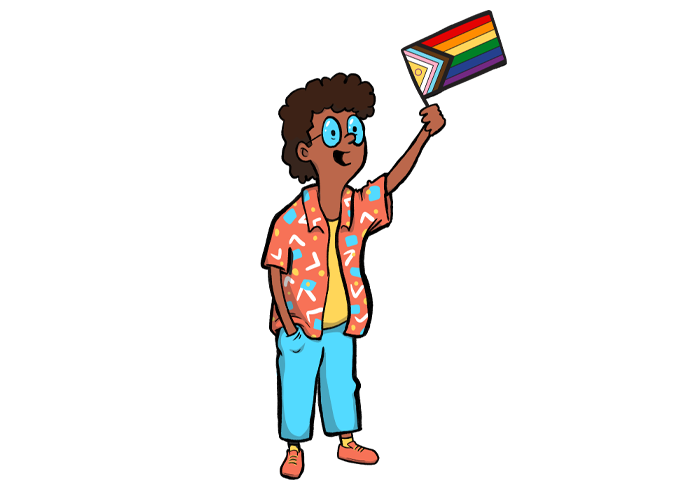
There are LGBT+ children in all schools and they are a diverse group, just like other children. However, LGBT+ children have in common the fact that they are outside the so-called norm in terms of sexual orientation, gender expression, sex characteristics, and/or gender identity.
The National Curriculum, gender equality legislation, and Reykjavík City’s Human Rights Policy require schools to consider and teach about LGBT+ people and issues. This page has material that will hopefully make that task easier for schools.
LGBT+ friendly schools
Schools that want to be LGBT+ friendly can use the checklist below, which is divided into three sections: students, teachers, and the school.
All schools can benefit from the checklist regardless of school level, but some aspects are more relevant to older children than younger ones and vice versa.
Info and instructions have also been compiled for schools that prefer to organize birthday celebrations and birthday groups without defaulting to traditional gender divisions.
LGBT+ youth center
The LGBT+ youth center operated by Tjörnin and Samtökin '78 — The National Queer Organisation of Iceland serves LGBT+ young people ages 10-12 and 13-17. The center is located at Spennistöðin, next to Austurbæjarskóli. The director of the youth center is Hrefna Þórarinsdóttir.
Samtökin '78 also have a group for LGBT+ youth aged 16 and over in their premises. You can get more information from Hrefna or '78.
LGBT+ education material
Here is a list of LGBT+ education material including books, articles, videos, and more, covering LGBT+ issues, including transgender child and adult issues. Each item has a brief description of the content as well as its language, as well as who it might be appropriate for. When using material for children, it is good to use it as a starting point for discussions.
You can also check out the 2021 Gender and LGBT+ Education Material Report, which groups content by school level.
LGBT+ families
Keep in mind that students' parents, guardians, and family members may be LGBT+. Schools must weigh several factors to ensure LGBT+ families feel welcome, accommodated, and included, while protecting students from exclusion or bullying because of their family structure.
Educators should carefully evaluate how families are discussed in school life, who is represented on administrative forms, and how families are invited to participate in activities. Staff members may also have LGBT+ relatives, further emphasizing the need for inclusive language and discourse throughout the school.
Just as we do for LGBT+ students, we must ask: "How do LGBT+ parents and families know they are welcome and that this is a supportive environment?"
Well-being of LGBT+ children and youth
Because our society does not automatically assume people are LGBT+, these individuals face a higher risk of exclusion, discrimination, prejudice, bullying, and other forms of violence.
These dynamics appear in many settings, but especially the school system, where young people spend significant time and are profoundly shaped by their experiences—a reality confirmed by well-being surveys of LGBT+ youth in Icelandic schools.
The well-being and circumstances of LGBT+ children and youth in schools
Domestic and international research demonstrates that LGBT+ students often struggle more in school than their peers, as teaching practices, instructional materials, and general discourse frequently exclude or even demean them. It often seems that silence and embarrassment prevail around queerness, and children often hear LGBT+ terms used in negative terms before learning what the terms really mean.
A recent survey of the experience of LGBT+ youth in Icelandic schools showed the significant positive influence supportive teachers and diverse teaching materials and discussions (based on LGBT+ issues) can have.
More information, education, and advice
The following parties can offer consultation, various LGBT+ education, and advice.
- You can reach the Human Rights Office's LGBT+ specialist by emailing hinsegin@reykjavik.is.
- The Equality School provides support and advice, as well as education, on equality issues in both Reykjavík City schools and after-school programs. Contact the School of Equality at jafnrettisskolinn@reykjavik.is
- Samtökin '78 have an agreement with Reykjavík City and provide training to students on LGBT+ issues and people in Reykjavík City schools free of charge. Counseling is also available for LGBT+ children/people and their immediate families free of charge. You can sign up for education on the website of Samtökin '78
- Samtökin '78 and Tjörnin run an LGBT+ youth center for all young people aged 13 to 16 who identify as LGBT+ or have another connection with LGBT+ issues. LGBT+ social activities are also available for 10-12 year olds. Hrefna Þórarinsdóttir is the director and she provides further information about their activities and opening hours.
What do you want to explore next?
- School Obligations Equality education should take place at all education levels.
- The School of Equality A platform for sharing knowledge on equality issues with the staff of preschools, primary schools and after-school programs.
- Trans children and schools Trans children now come out both younger and to a greater extent than before.
- LGBT+ education material Do you want advice on LGBT+ issues?
- Well-being of LGBT+ children and youth How are our children feeling?
- Term definitions LGBT+ is an umbrella term for those who fall outside of what is considered the norm.
- Support and services for transgender children It is important to recognize the gender identity of trans children.
- LGBT+ issues What is Reykjavík City doing on LGBT+ issues?
