Staff and parent toolkit

Even when adults understand the importance of sex education, many hesitate to teach it—whether because they doubt their own knowledge, fear difficult questions, or feel unsure about what is age-appropriate.
The staff and parent toolkit includes a variety of materials, tips, and information to support effective sex education.
Staff and parent toolkit
From Taboo to Trust
Online sex education resources for children
-
From Taboo to Trust is a YouTube series for staff and parents divided into five parts: sex education for younger children, children's sexual behavior, tips for effective education, educational materials and tools, and sexual abuse of children.
-
Sex education for younger children — part 1 of 5.
-
Children's sexual behavior — part 2 of 5.
-
Tips for effective education — part 3 of 5.
-
Educational materials and tools — part 4 of 5.
-
Sexual abuse of children — part 5 of 5.
Attachments
-
Discussion questions for staff — available as a supplement in Icelandic and English.
-
Discussion questions for parents — available as a supplement in Icelandic and English.
Violence and harassment
Pamphlets
- "Erfið spjöll" is a handbook guiding Department of Education and Youth staff on how to respond when a child or young person discloses abuse. A collection of tips to help staff and parents prepare for sex education sessions or conversations on related topics.
- "Hvað nú?" is a support booklet for parents and guardians of children and young people who have experienced sexual abuse or harassment.
- "Eitt skref í einu" provides support for the immediate family of children and young people who have experienced sexual abuse or harassment.
- "Að ná áttum" offers guidance for the immediate family when concerns arise about a child's welfare after a serious incident.
Resources
- "Kynbundið ofbeldi og skólakerfið" (Gender-Based Violence and the School System) is a guide for school administrators and staff on preventing, responding to, and handling cases of gender-based violence.
- "Hvert get ég leitað" (Where can I turn?) is a printable poster listing available resources.
- How do I approach the conversation with my child? provides guidance for concerned parents.
- This informational brochure from Stígamót covers sexual abuse and Stígamót's services, and is available in multiple languages.
Queerness
Checklists
- The checklist for building LGBT+ friendly schools provides information on creating an LGBT+ friendly school environment.
- The checklist for trans friendly schools provides key information on what it takes to build a transgender-friendly school environment.
- The guide "Birthday groups — instructions for schools" provides information on how schools can promote inclusive birthday celebrations for children.
Brochures and guides
- The poster "What is LGBT+?" explains various LGBT+ definitions.
- The guide "Supporting an intersex child — a guide for parents" offers practical advice for families of intersex children.
- The guide "A child or young person comes out — a guide for families" from Samtökin '78 offers advice to support the immediate family of LGBT+ young people.
- The guide "How to respond to questions about transgender people in gender-segregated spaces" provides key definitions and advice for handling challenging questions.
- The brochure "Talking about trans" covers terminology and discourse related to transgender people.
Teaching materials and plans
- The overview "Teaching materials for gender and LGBT+ education in preschools and primary schools" lists books, videos, and other resources for sex education.
- Staff can use the support plan for transgender students and students with atypical gender expression when assisting LGBT+ students.
Frequently asked questions
Where can I find materials for teaching sex education?
The School of Equality website offers toolkits featuring teaching guides, activities, books, videos, and additional websites for classroom use. We organize this content by age group, tailoring it to children's development and knowledge at each education level.
- Preschool toolkit
- Toolkit for the lower level of primary school
- Toolkit for the middle level of primary school
- Toolkit for the upper level of primary school
What does comprehensive sex education involve?
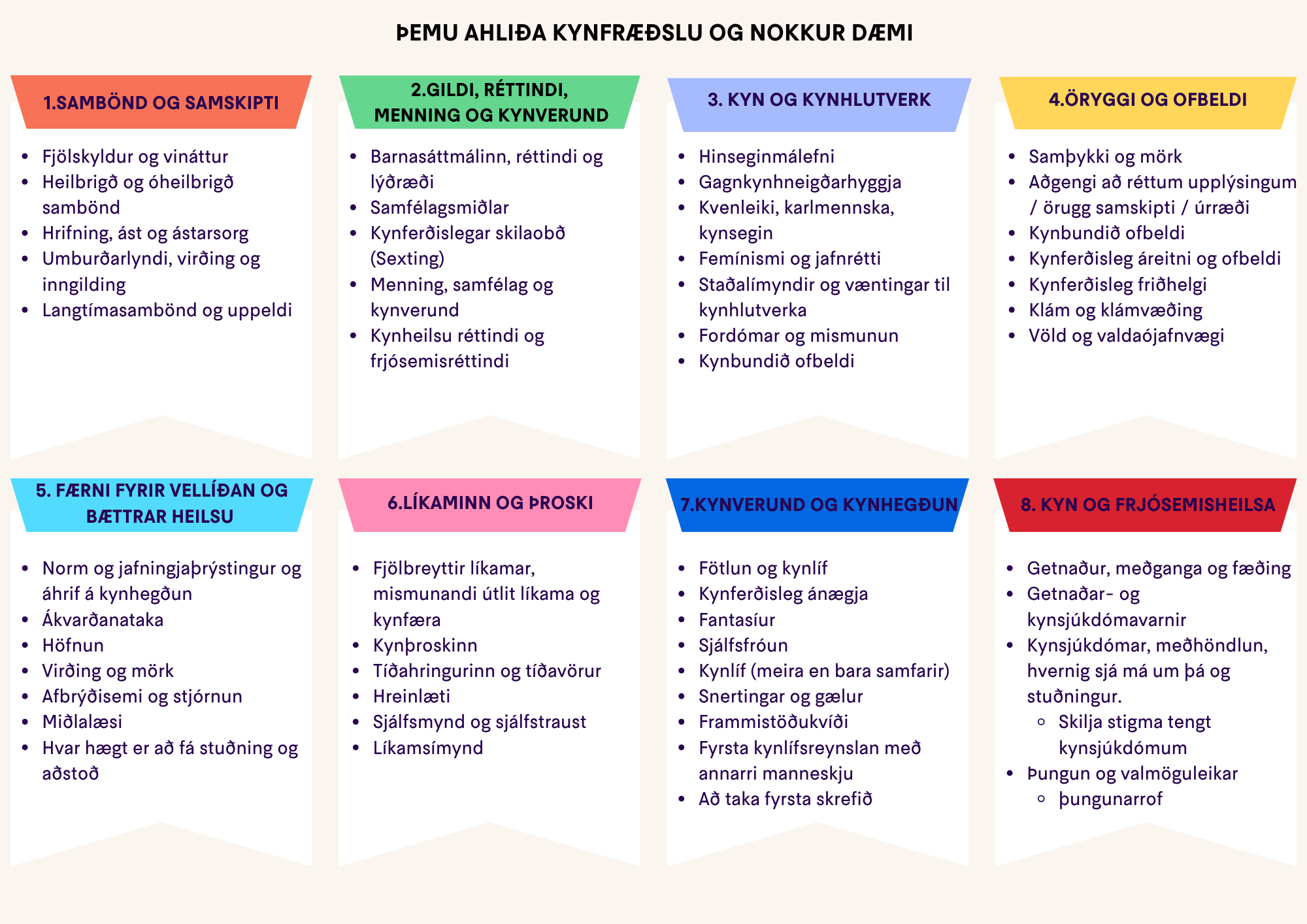
Comprehensive sex education focuses on various aspects of sexual health: physical, social, and emotional. Schools should always tailor sex education to the age and developmental stage of the children and young people they teach. Comprehensive sex education includes sex education, LGBT+ education, gender education, and equality education. Built around UNESCO's themes for comprehensive sex education, the School of Equality tailors all content to children's age and developmental stage.
Why is comprehensive sex education important?
According to educational law, all children shall receive sex education at every education level. Through comprehensive sex education, we teach children and young people to recognize and respect personal boundaries; help them understand that these limits vary by individual; expand their knowledge of the body, emotions, gender identity, sexual orientation, rights, healthy relationships, and sexual health; strengthen their self-image and critical thinking skills so they can make choices that benefit themselves and others; and raise awareness of sexual health while empowering them to make independent decisions grounded in self-respect and respect for others. Decades of research on effective sex education for children and young people underpins comprehensive sex education.
What should you keep in mind when teaching sex education?
Before you begin, take time to prepare both the setting and yourself. Establish clear ground rules with the group around listening, respect, and confidentiality. When students help shape those rules, they develop a stronger sense of ownership over them. Be mindful of the diversity within the group and give extra thought to students who might find the subject matter difficult, as some need to know in advance what you will cover.
Word choice matters. Use gender-neutral language whenever possible, apply correct anatomical terms, and avoid making blanket assumptions about students or presuming their experiences. Your courteous and warm tone sets the atmosphere for the entire group.
Take time to reflect on your own attitudes and biases before you begin. If you do not feel confident leading a particular discussion, do not force it. It is better to bring in another professional or to prepare more thoroughly beforehand. Remember that you are in an educational role — not acting as a counselor or peer — so do not share your own sexual experiences with students.