Digital citizenship
Being a digital citizen means having the knowledge, skills and attitude needed to show responsible and respectful behavior when using technology.
The national curriculum for primary schools places a strong emphasis on digital citizenship skills.
Life skills — online too
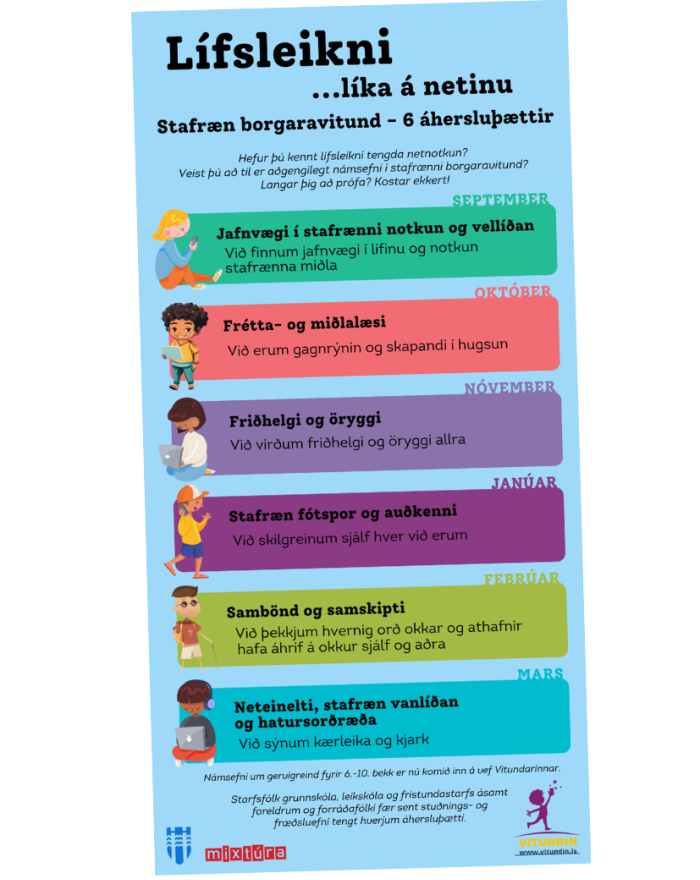
This school year, the city's schools and recreational activities will emphasize digital citizenship through the Life Skills — Online Too project.
Primary schools citywide are using curriculum materials from Vitundin.is, organized around six focus areas. Classes dedicate one month to each focus area. Each topic provides supporting materials for professionals, parents, and guardians.
A shared focus across schools, recreational activities, and homes gives parents and staff the chance to have simple but meaningful conversations that build life skills and digital citizenship.
Learn more about:
Digital citizenship curriculum
This page provides an overview of digital citizenship educational materials, including translated content from Common Sense available on the Vitundin website.
- Vitundin - Digital citizenship educational materials
- Raddir unglinga - peer education video playlist
- Overview of information sources on digital citizenship
- Information and media literacy, practical guide
- Good online habits - key points to remember
Children's digital challenges
Everyone has devices – everyone's online – what now? Giving a child internet access comes with responsibility. Despite obvious benefits, there are risks. It's our job to teach children how to use the internet safely. We must understand the main challenges.
Information sources - education
Heilsuvera - Screens and children
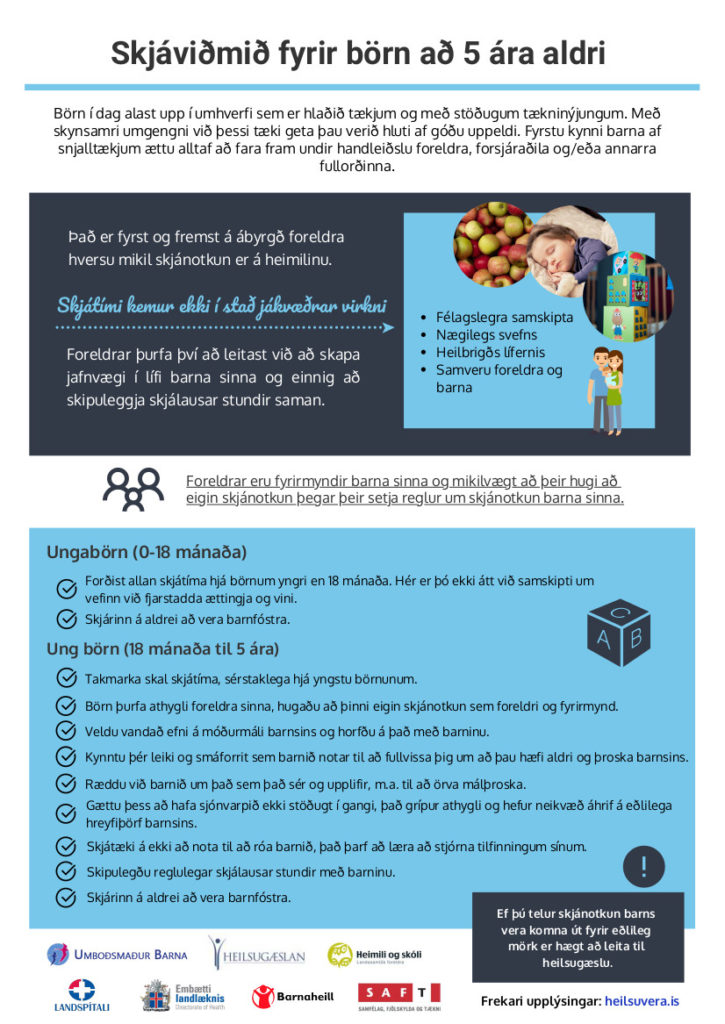
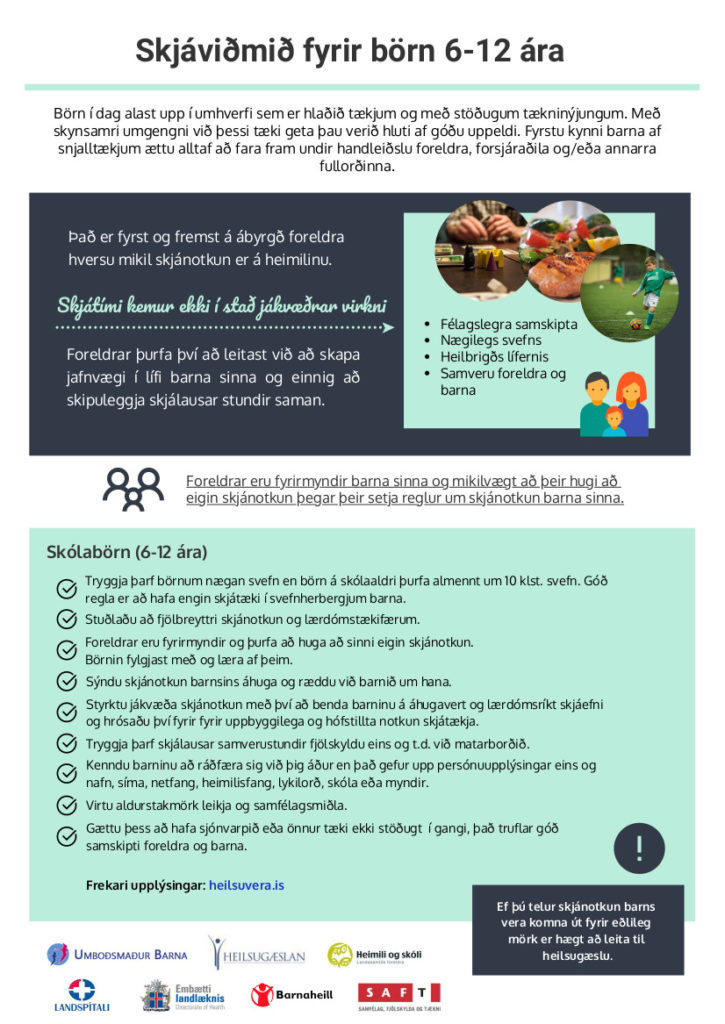
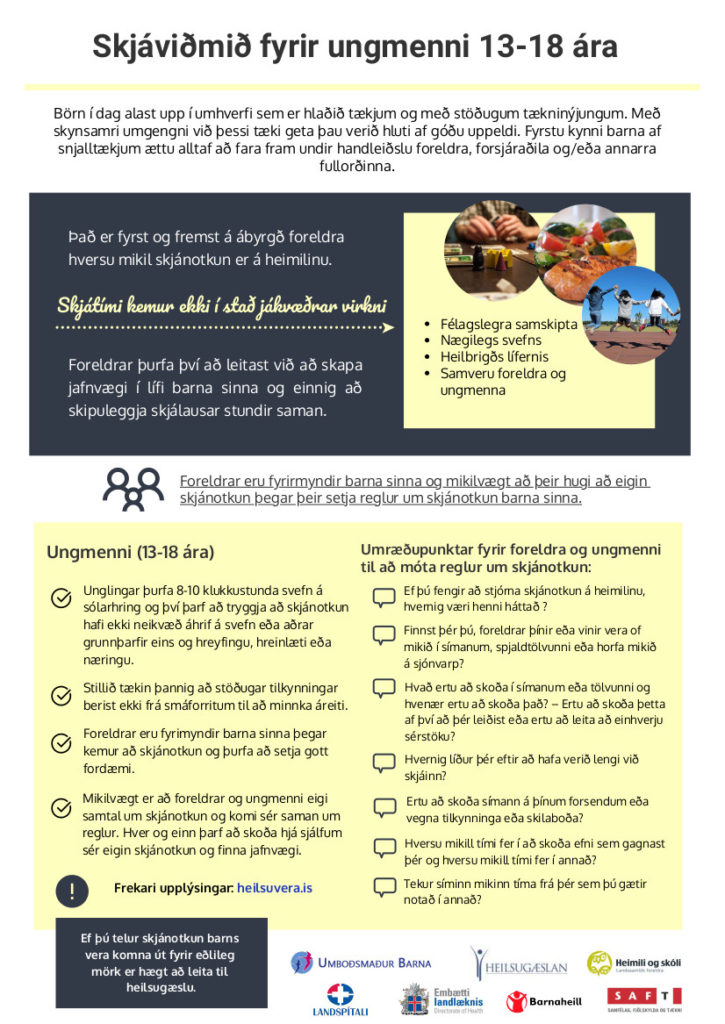
The Heilsuvera website provides guidelines on screen time for children and young people. Topics include what to consider before a child goes online, age guidelines for video games and social media, screens and sleep, and more. It also offers a checklist for addressing concerns about screen use, helping children and young people set boundaries and find support.
Printable screen guidelines:
Netvís - center for social cybersecurity and media literacy
The Icelandic Cybersecurity Center operates the Netvís website. The site provides education for children and young people, parents, and professionals, along with other resources.
Miðlalæsi.is - website on information and media literacy
A special education week on information and media literacy was held for the first time in Iceland in February 2023. All schools received an education package with 6 educational videos and teaching materials. The content is available on a website launched for the campaign. It also includes a summary of definitions for online terms.
Media literacy at the Media Committee - Parent education
Skúli B. Geirdal, project manager of Media Literacy at the Media Committee, educates parents and guardians about children and social media. The session is based on an extensive survey of primary and secondary school students in Iceland.
RÚV podcast - Children and youth online
The RÚV Society and Social Media podcast has episodes about children and online media.
Ombudsman for Children - Internet and social media
The Ombudsman for Children's website offers guidance for parents and guardians.
112 - Cybersecurity education, live chat with Red Cross volunteers
The 112 website offers cybersecurity education. It also provides live chat with 112 emergency dispatchers and Red Cross 1717 volunteers, anonymous for voice calls only.
What do you want to explore next?
- Mixtúra Creative and technology workshop
- Mixtúra professional development Education with Mixtúra
- Creative technology Creative education, creative submissions
- Digital learning Implementation of educational devices 1:1
- Data protection and e-learning Laws and regulations
- Software in schools Learning is fun
- Google Workspace employee instructions A, B, C, D, E, F, Google
- Google Workspace Student Guide A, B, C, D, E, F, Google
- System administrators Have you tried turning it off and on again?
Mixtúra
Reykjavík's Department of Education and Youth's Creation and Information Technology Studio
Mixtúra is located at the University of Iceland’s School of Education.
Resource Lending Library opening hours:
Mondays from 1:30 to 3 p.m.
Fridays from 9 to 11 a.m. and 1:30 to 3 p.m.
You can contact us by email: mixtura@reykjavik.is