
Services that matter
Department of Service and Innovation Annual Report 2024
Service and transformation
The Office of Service and Transformation leads service transformation and service process redesign within the City. The office also handles implementation of the service strategy while taking responsibility for Reykjavík's unified front-line services and service center.
Transformation Division
The Transformation Division analyzes, designs, develops and implements improved services. This year, the division included specialists in digital project development, user experience specialists, civic designers, digital product designers, content writers, a graphic designer and a user researcher.
Putting people first
The division worked on various projects throughout the year to make the City's services simpler, more accessible and more efficient.
A user-centered approach guided all work, emphasizing needs assessment, testing and close collaboration with staff and residents.
New solutions were developed, knowledge was shared and numerous workshops were held to support improvements in the City's services.
Needs assessment for Ártúnshöfði
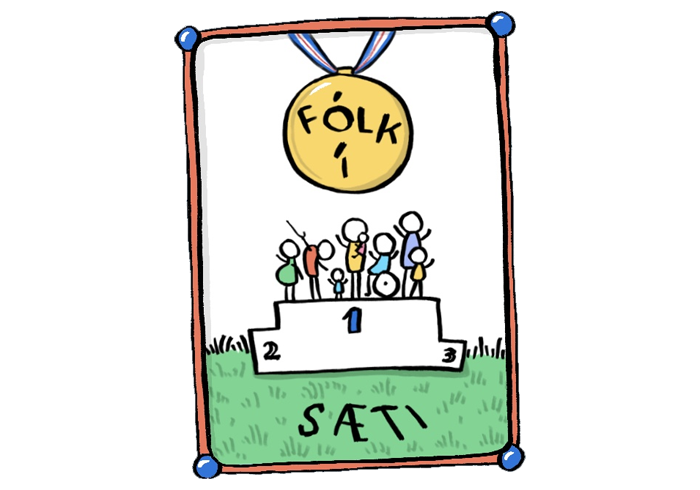
A needs assessment was completed for a cultural and community center in the new district at Ártúnshöfði. The assessment was unusual because it wasn't possible to interview actual users, since the subject was a building that doesn't exist in a neighborhood that doesn't exist.
Instead, residents in newly built areas were interviewed to understand whether the lack of services and community spaces affected their experience. Basic resident needs were mapped and suggestions were made for spaces that could meet these needs.
My Pages
My Pages continued to grow and thrive as one of the City's largest digital products. Users can easily request services and monitor the status of their cases through this platform. Its purpose is to simplify life for residents and businesses by providing improved access to public services.
Various new features were added during the year, including a new authorization solution through island.is that allows individuals and company executives to authorize others to handle their matters on My Pages.
Other additions included:
- Status updates for guardians regarding primary school enrollment
- Application for a resident parking permit
- Document upload after submission
- Secure notification payments.
- Digital mailbox
- Reporting form for technical issues
- Language settings
Bloomberg partnership
In 2021, Reykjavík City received a grant of about USD 2.5 million from Bloomberg Philanthropies, the charitable organization owned by Michael Bloomberg. The organization supports community projects around the world that aim to improve public health, education, environment, urban development and access to culture and arts.
The grant enabled the City to establish a so-called i-team to accelerate digital transformation. This was significant recognition of Reykjavík's global leadership in developing public services. Many cities applied for the grant, and in addition to Reykjavík, Amsterdam, Bogotá, Mexico City, San Francisco and Washington D.C. received similar grants.
The partnership gave the department an opportunity to hire staff with very diverse experience from different sectors. Among other requirements was hiring an artist, which gave the department's transformation projects a new dimension and opened up creative solutions. In addition to the artist, a social psychologist, communications specialist and data specialist were hired, all of whom contributed to new approaches and solutions.
Digital roadmap
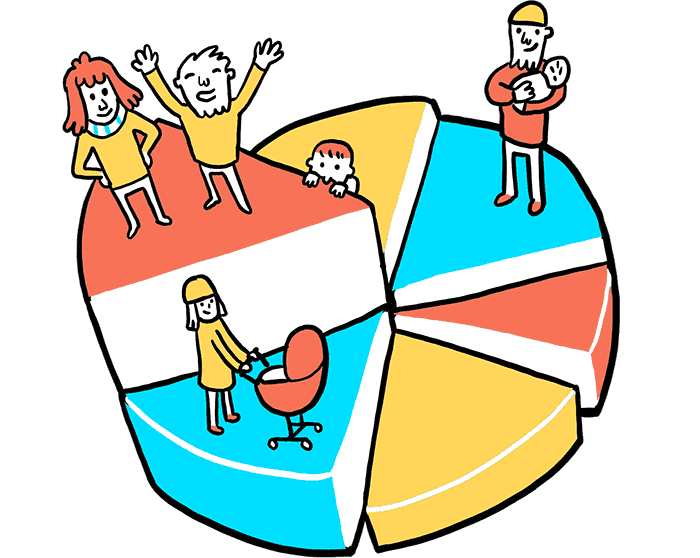
With support from Bloomberg specialists, a roadmap for the City's digital transformation was developed. The digital roadmap highlights essential key priorities to ensure future digital sustainability. The roadmap defined the department's vision for the next five years and set goals in the form of strategic guidelines along with appropriate actions.
Better City for Children
The partnership's first project was also one of the City's largest and most complex transformation projects: Better City for Children. The project focused on improving services for children who need additional support in school, commonly called school support services.
A new service process was designed with clearer roles and priorities, along with new application forms and clear procedures. Interdisciplinary solution teams were established in schools to map children's status and support them. During the year, work was also done on developing a digital solution that supports the new service process and is based on the values of early intervention and civic design and the Child Prosperity Act.
Multilingual
Another Bloomberg partnership project focused on finding ways to better support multilingual children and their parents. Extensive analysis work with specialists, teachers and 50 parents of multilingual children from 25 countries led to the development of three solutions:
- Goal-setting tool — A tool to help teachers, parents, and children set shared goals based on realistic expectations for Icelandic language learning.
- Shared Voices — A mentoring program that connects children learning Icelandic with peers who are further along in the language.
- Information package — A central hub offering guidance on the school system, practical tools, and resources to strengthen Icelandic language skills.
The project officially ended in fall 2024. The goal is for implementation in all Reykjavík City schools, and the Center for Education and School Service is also working to make the solutions accessible to schools nationwide.
Permits and life in the city
The partnership's final project focused on analyzing operating license processes at the Department of Environment and Planning. Interviews, data and conversations with applicants, City staff and stakeholders in the restaurant industry were analyzed.
The results revealed various challenges in the process. To address these issues, the team proposed solutions that simplify the application process, increase support for applicants, improve information sharing and access to guidance, and ensure greater consistency in services and procedures.
The project concluded in December 2024, but next steps depend on decisions by Reykjavík Public Health. At the same time, implementation of a new oversight system has begun and work is underway to coordinate between municipalities.
Interpretation that people connect with
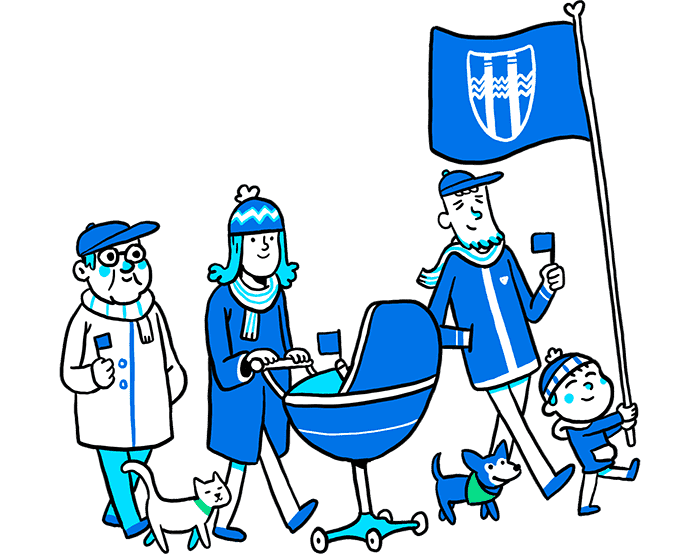
Although the Bloomberg partnership has officially ended, its impact can still be seen throughout the department and across the entire City in the form of digital products, services and culture. The most visible result may be the artist's contribution, who succeeded in transforming complex data and varied realities into understandable, accessible and vivid form that most of us can connect with.
Conferences, lectures and education
The Transformation Division participated in several conferences during the year on civic design and improvements in public services, both to share its own experience and learn from international experts.
Conference – Ready to Serve
On Sept. 19, the Department of Service and Innovation held the first public service conference in Iceland. The title was "Ready to Serve!" and the program featured diverse presentations on various aspects of public service from both Reykjavík and other municipalities and institutions. The conference was open to everyone and drew more than 200 participants.
The conference focused on civic design and user experience and examined how the state and municipalities provide services to residents across administrative levels. Presentations included discussions of service enhancements for multilingual children in Reykjavík, service transformation at Landspítali Hospital and development of the government's service strategy.
Part of the conference included three workshops where 60 participants had the opportunity to deepen their knowledge in the field. The workshops were led by leading global experts in user experience, civic design and urban development: Lou Downe, Adam Lawrence and Cecilie Bang Shulze.
Presentation at conference in Helsinki
Team leaders from service and product design presented at the International Design in Government conference in Helsinki on how Reykjavík has built an in-house design culture and implemented design methods in service transformation projects.
Management day
Reykjavík's management day focused on good service. The event emphasized the importance of analyzing user experiences to design the right solutions and ensure services meet the real needs of residents.
Growth Lab
Spring 2024 saw the first Growth Lab, an eight-week service design sprint where staff from across the City administration came together to find new ways to improve services and simplify work processes. The project is part of implementing the City's service strategy and is based on civic design methods.
Participants worked on real challenges and developed solutions to implement at their workplaces. For example, Department of Environment and Planning staff simplified outdoor dining permit processes, and welfare department staff worked on integrated services for residents.
The project concluded with a harvest celebration where solutions were presented and participants were recognized as leaders in service transformation. The next Growth Lab will take place in fall 2025.

Service experience
In 2024, the Service Experience Team used diverse and creative methods to support implementation of the City's service strategy. The team tested new tools, held workshops and gave presentations to strengthen service culture within the City administration.
The Chutes and Ladders game
The Service Experience Team launched a creative solution in the form of a Chutes and Ladders-style game to map user journeys through City services. This game offers staff a playful and engaging way to better understand the user experience.
Service guidelines
The team presented ten keys to good service at the City's management day. Following this, work began on creating a video about the keys to good service, which will be used in education for all City staff.
Qualtrics survey software
The team completed the purchase of Qualtrics centralized survey software, which ensures a consistent approach to service measurements across the City. Implementation of the software is underway alongside development of improved procedures and educational materials in collaboration with department specialists in performance and service measurements.
Lego Serious Play
The team went beyond borders to add specialization in LEGO SERIOUS PLAY. This creative methodology is used in various situations, such as team alignment, improvement work, policy making, change management, personal development and ideation. For example, the team applied the method in policy making with the City's front-line service counselors.
Department of Environment and Planning service week
The team participated in organizing the Department of Environment and Planning's annual service week in March and gave two presentations to department staff on practical methods to improve user service experience.
Behind the implementation curtain
At the City's first conference on good public services, the team presented "Behind the implementation curtain," which explored different ways to carry out policy like the service strategy. The presentation stressed how important it is to stay flexible and willing to try new tools and methods to reach people and meet them where they are at any given time.
Workshops and process analysis
Various workshops were held with different groups within City departments to clarify processes, examine user experiences and find opportunities for improvement.
Front line
2024 was an eventful year for the front line, marked by improvements and increased automation of digital solutions. We focused on simpler processes and more targeted services while strengthening collaboration with other divisions within the department.
Smarter services with more streamlined processes
Over the past year, the front line started improvement work with waste collection to improve first-contact resolution. Work with Reykjavík Parking Service also continued. Working with the service and communications office at the Department of Environment and Planning, we redesigned how inquiries flow from the front line to specialists. We increased specialization of welfare department liaisons to improve child protection phone services and worked with the human resources and work environment department on a standardized quality process for complaints. We also established new processes for responding to threatening behavior in the service center.
Work requests in Jira
This year, the front line launched Jira as our new work request system. The system automatically creates requests for most email addresses that the front line manages, reducing manual entry and increasing efficiency. At the same time, we defined request flows both within the front line and between departments and set up automatic responses to residents.
Jira also makes it easier to analyze inquiries, such as the percentage answered at first contact and those forwarded to specialists. The system finally gives us better oversight of the total number of submitted inquiries, which was previously difficult to track when requests came only through email.
The launch supports more efficient handling of inquiries in the departments and opens up possibilities to use Jira as part of a new feedback website.
Confluence makeover
We worked on redesigning the front line's knowledge base in Confluence with the web team and an artificial intelligence specialist from the service and innovation department. The goal is to improve access to information and maximize productivity. With the new custom-designed area, artificial intelligence capabilities and Confluence will be integrated to create a more powerful and user-friendly knowledge base.
Purchase of Genesys licenses
The bidding for purchasing the front line's communication solution was completed and we made a three-year contract to purchase Genesys licenses serviced by Advania. The system has been continuously adapted to the front line's needs, but the most significant change this year was setting up an emergency flow that can be activated if front line workplaces need to be evacuated.
Electronic ID
We made a contract with Auðkenni this year for a registration station in Reykjavík's front line service center. The City became the first municipality to make this type of contract with Auðkenni. This created a new role for an Auðkenni registration and education representative in the front line. This project will improve access and support the self-service solutions that the City offers which require electronic user authentication.
Strong and unified front line
This year, IT Services' asset management got a workstation in the service center. The change has been successful, both for asset management's work environment and departmental collaboration, while also increasing staff access to IT Services.
The unified front line plays a key role in strengthening first-contact response, which is one of the main goals of the City's service strategy. As our services have evolved, front-line work has shifted from general information sharing to more targeted consultation. We decided to change the job title from "service representative" to "service advisor," which better reflects the actual role and focus of the position today.
More automation and digital development
This year, our digital workforce Þjarkur took over answering inquiries about property rates status. Previously, 20-40 requests arrived daily by email that service advisors had to process manually. With Þjarkur's launch, all requests now go through an automated process that eliminates wait times, increases efficiency and frees up staff time for other projects.
Mail processes were also simplified by having staff register certified mail themselves on postur.is before handing it off for delivery. This way, tracking numbers go directly to the sender and responsibility is clearly defined.
Additionally, the front line took on new projects in internal services. These include entering data from My Pages into Hlaðan for the Building Commissioner and delivering employee cards in collaboration with facility management. With these changes, the front line is supporting faster processing of cases and reducing the workload on the City's specialists.
Education
This year, work began on a new structure for training the front line at Torgið. Regular meetings with service advisors were established to identify opportunities and challenges in the City's front-line services. With increased emphasis on dialogue and collaboration, a platform was created for sharing experience and building skills, which strengthens both the service and work environment.
Front-line service advisors also attended an international conference, Customer Contact Week, in Amsterdam. The conference provided an important venue for gaining new knowledge, following developments in international front-line services and bringing good ideas home.