
Automated translation
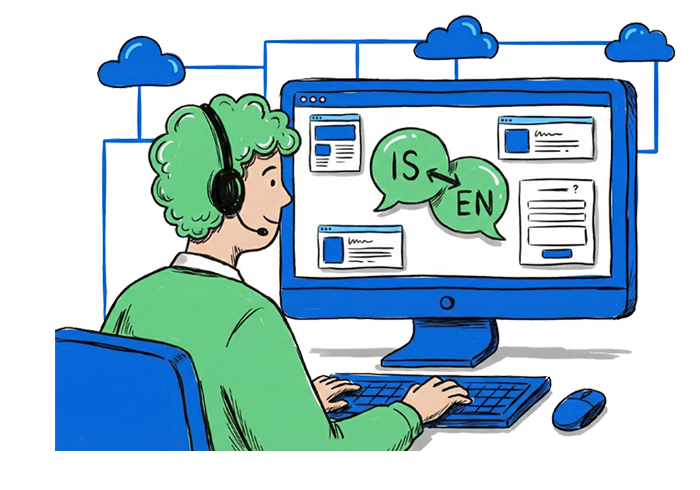
The reykjavik.is website has an AI-powered translation system that works automatically for staff who publish content. This makes the City's information and services available in English for residents who don't have Icelandic as their native language. The system has been under continuous development since 2020 and now covers nearly all content on the City's website, from news and service pages to forms on My Pages.
The project
About 20% of Reykjavík residents do not have Icelandic as their native language. For this group, the City's website had long been inaccessible since traditional machine translation services like Google Translate handle Icelandic poorly due to its complex grammar, specialized terms and limited training data. The City's old website wasn't translated into English — only an overview of key services was available on a separate English site. The goal was to build a translation system that would achieve near-human quality while requiring only one translator to maintain an English mirror version of the entire website.
The system uses RAT (Retrieval Augmented Translation), which combines large language models with custom terminology databases and inflection lookups. This ensures municipal and administrative terminology is accurate and translated consistently across all content. For example, "grunnskóli" is always translated as "primary school," while automated systems tend to translate it as "elementary school," which only covers the youngest level. The system also standardizes the tone and style of mirrored content.
Content flows through translation pipelines, starting in the Drupal content management system, then moving through CAT machine translation tools (computer-assisted translation) and language models before returning to the English side of the Reykjavík website. The translator ensures all content flows correctly and is reviewed, while staff work entirely in Icelandic and require no extra steps for the mirroring process.
System development
The system has evolved significantly since its inception:
2020–2023
Machine translation with neural networks (NMT) that required extensive review. Much of the published content was unreviewed and of varying quality. Only a selection of the most-read pages could be reviewed, and mirroring was far from real-time. Only occasional news articles were translated.
2024
Switched to translation powered by large language models (LLM), which immediately improved quality and reduced the review workload. Considerably more content was translated regularly, and more news articles were translated upon publication.
2025
Nearly complete translation of all web content into English, excluding meeting minutes and certain content types. Now thousands of pages are mirrored, and we also translate content from all the City's schools, forms on My Pages and more. Continuous quality improvements are based on experiments with different models, model combinations, and prompt engineering techniques.

Main goals
- Make the City's website accessible to all residents, regardless of language.
- Achieve quality comparable to human translation with a semi-automated solution.
- Simplify workflows so that one translator can handle the entire website.
Screenshots
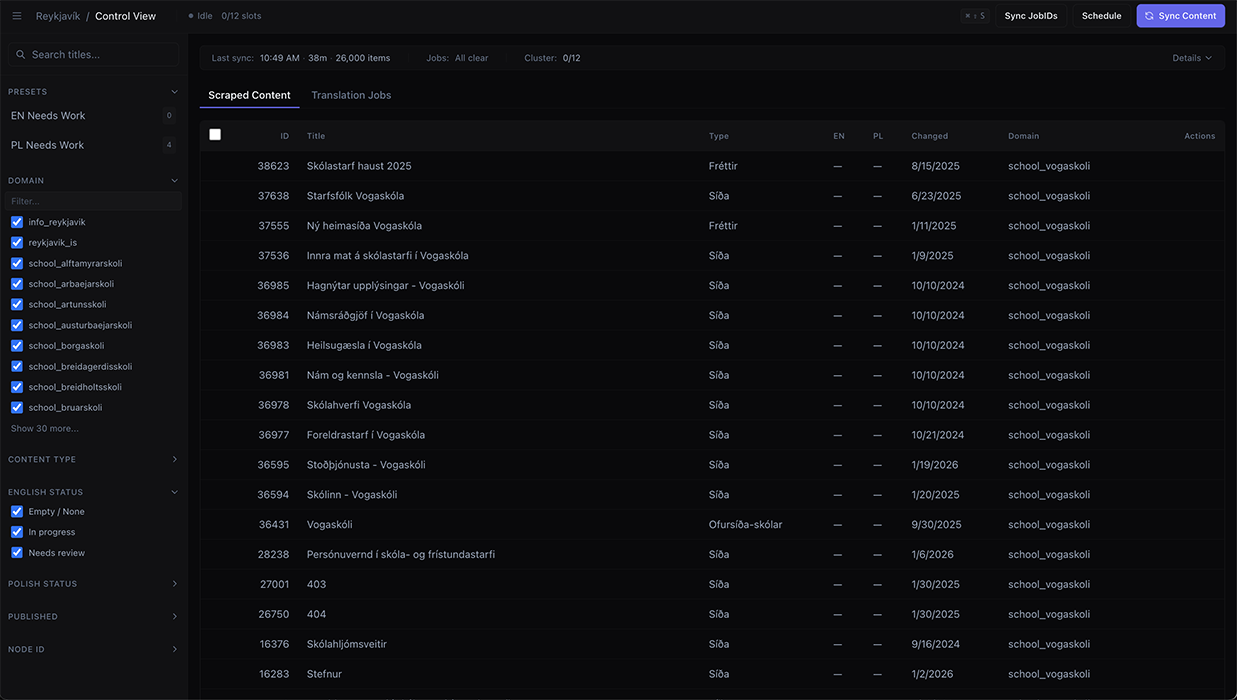
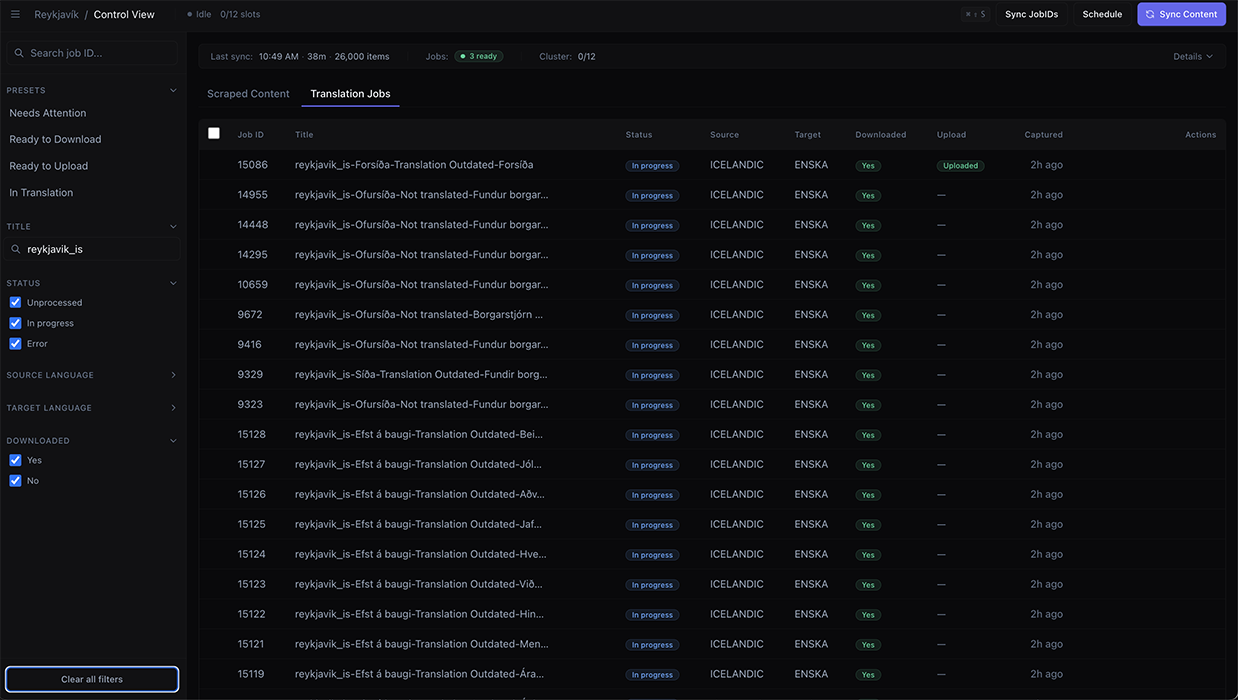
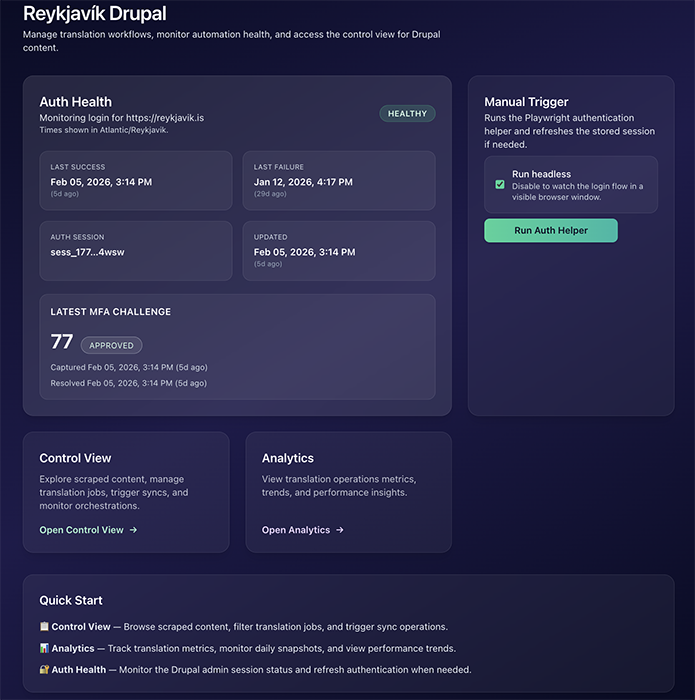
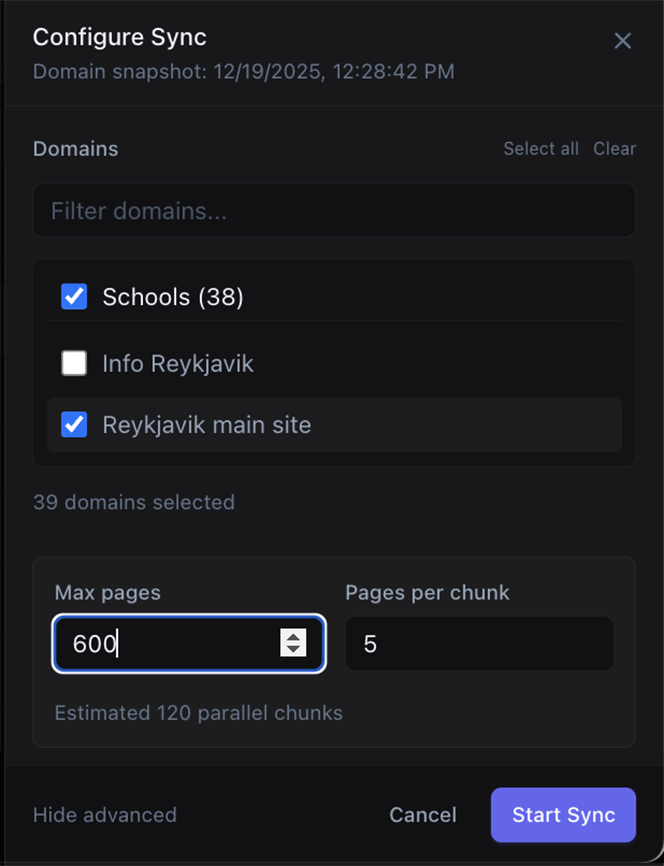
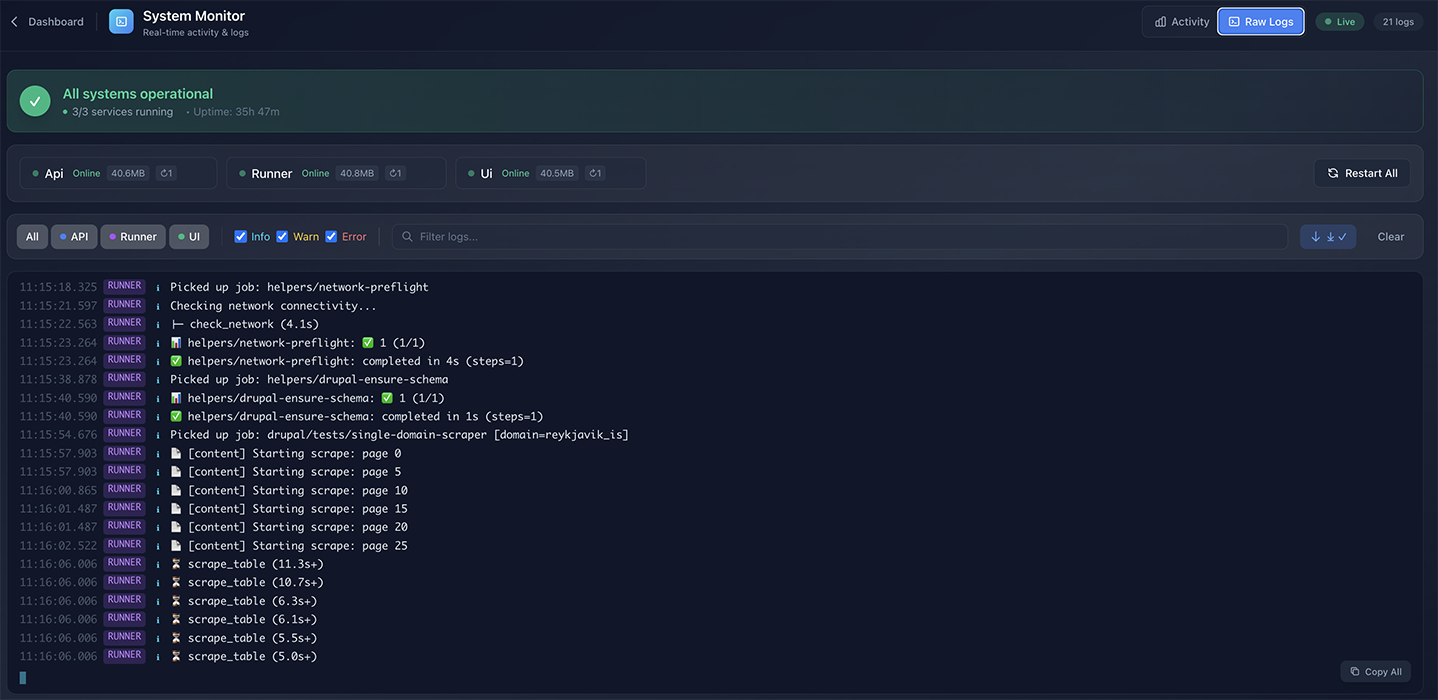
Accomplishments
Readership of the English version has grown five times faster than the Icelandic content.
Quality control involves regular sampling where the city's translation solution is compared with Google Translate and Microsoft Translator, for example. Since 2024, reader feedback has been collected through Qualtrics, with a sidebar on each page of the English version where readers can send direct comments about individual pages. Out of hundreds of thousands of visits, fewer than one complaint per month is received about the quality of English content.
The English version also serves as a high-quality intermediary for further machine translation into third languages, since translation from English is generally more reliable than direct translation from Icelandic.

Key findings
- The quality is comparable to human translation.
- Staff work entirely in Icelandic and do not need to change their workflow.
- One translator can maintain an English mirror version of the entire website.
- Terminology is standardized across all content.
- The scope of translations has grown steadily as the system has become more efficient.
Language and technology
The system translates from Icelandic to English. Icelandic belongs to a small language area with few speakers, so there is little Icelandic content available (a low-resource language) compared to the amount necessary for training language models. However, government and private entities have undertaken major efforts in data collection and system development under a language technology plan that benefits us all. This project shows that targeted work with artificial intelligence can compensate for a lack of training data and deliver the same translation quality to smaller languages as to larger ones.
The RAT method uses multi-step processing: analysis of source text, terminology lookup, translation with language models, and then adjustment to style and tone. This process ensures the final result is not only correctly translated but also in good English.
Continuous development
The project is in continuous development. Next steps involve expanding the scope of translated content to include the city's custom systems, not just traditional web pages but also additional content types in internal systems where data is more difficult to access.
Every time we update the underlying language models, processes, internal systems, and prompts, the translations get better automatically. We will continue to experiment with these models, model combinations, and prompt engineering strategies to further enhance quality and expand coverage.
