
Services that matter
Department of Service and Innovation Annual Report 2024
Department of Welfare
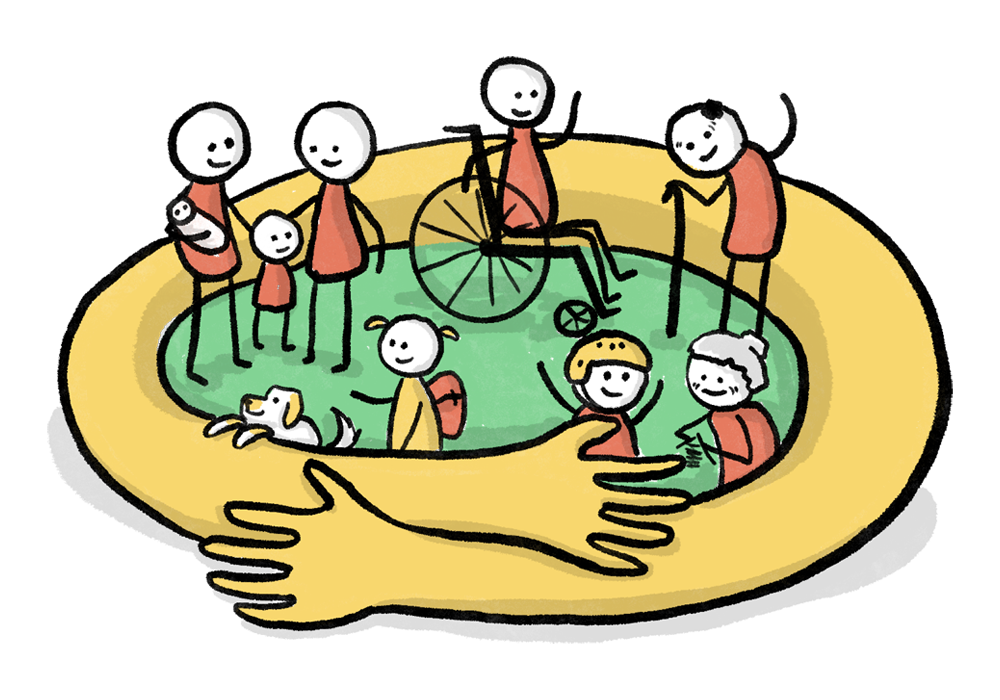
The Department of Welfare offers a diverse and ambitious welfare service aimed at enhancing the quality of life for the residents of Reykjavík City. In recent months, strong emphasis has been placed on implementing welfare technology in Reykjavík City services.
A model within City administration
Throughout the year, we continued efforts to improve digital access, streamline workflows, and support both staff and residents with more user-friendly services. The Department of Welfare has long been a leader in digital development within Reykjavík City, including being the first department to hire a digital transformation lead.
The department has shown initiative and quickly adopted innovations, becoming a model within City administration. Collaboration with the Service and Innovation Department has grown and is marked by mutual respect, trust, and a clear shared vision.
Dala.care
Implementation of dala.care began this year, a new system for home and residential services. This is the most extensive implementation project undertaken by the Department of Welfare, as it affects a wide range of staff and service users, including older people, disabled people, children, and families. The system was launched for home support and support services across all centers, and implementation also began in housing resources and at Keðja (The Chain).
Dala.care simplifies documentation and improves oversight. This makes it easier to manage services for people and ensures that information is accurate and accessible when it matters most. The goal is to reduce time spent on data entry and administration so that staff can focus more on providing personal and human-centered services.
Transportation services
In September, applications for transportation services for older people and disabled people were moved to My Pages. Previously, these applications were submitted through a separate system at akstur.reykjavik.is, but are now accessible in the same environment as other city services.
At the same time, transportation services were integrated into the Veita system, which also manages financial assistance. There, staff can apply on behalf of residents, track application status, and automatically send approved applications to service parties, namely Pant and Blindrafélagið, Icelandic Association of the Visually Impaired. This made the process more efficient, simpler, and more user-friendly.
Other innovations this year
Web reader (ReadSpeaker)
This year, the web reader was implemented across all relevant Reykjavík City websites. It reads text aloud from the web, increasing accessibility—especially for people with visual impairment. The implementation is part of ongoing efforts to improve information and services for a diverse group of residents.
Mathilda
Implementation began for a new kitchen management system, Mathilda, which will be fully operational by mid-2025. The system will be used in production and receiving kitchens at the Department of Welfare to manage recipes, cooking instructions and temperatures, menus, supplier price lists, and food delivery to service users. It also tracks nutritional content and allergens in recipes, as well as special dietary needs of users, such as allergies and food intolerances. Primary schools that cook meals on-site will also use the system.
The system also simplifies purchasing by linking ingredients in recipes to the correct products from suppliers. Once the weekly menu is finalized, shopping lists can be generated for the appropriate suppliers, saving considerable time.
Digital mailbox
All response letters that were previously sent by mail are now delivered in digital mailbox. This includes communication from the Veita, S5, and Department of Welfare case management systems, improving both oversight and efficiency in communication with residents.
Búi
Work continued on developing the counseling module of Búi, which will replace the Department of Welfare’s case management system. Special emphasis was placed on the part of the system related to the “engagement and counseling” service category. Core functionality was improved through updated technical architecture, and work began on replacing the WebMethods backend with a new and more efficient solution.
Department of Welfare statistics
Data Services worked to move data from the Department of Welfare’s systems into automated data pipelines that feed directly into the data warehouse. This work supports improved oversight, analysis, and data-driven decision-making within the department.
