
Services that matter
Annual report of the Department of Service & Innovation 2024
Changing culture, not just websites
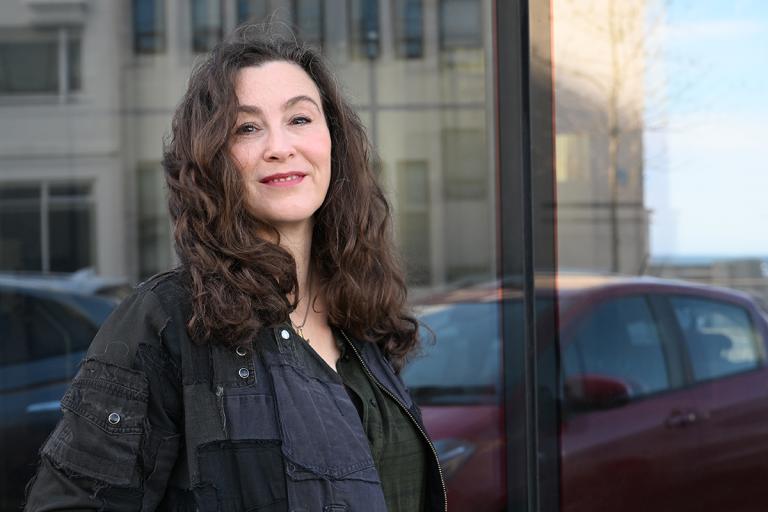
Elín Hrund Þorgeirsdóttir is a project manager and specialist in Reykjavík City's product and web development division. She began working three and a half years ago as a liaison between web development and the Department of Education & Youth and now plays a key role in developing and coordinating the City's school websites.
I was actually hired as a web content specialist for the Department of Education & Youth, which is one of the City's largest departments and handles an incredibly diverse range of projects. There was a big need to improve information sharing and coordination.
Improving information sharing and coordination
"I was actually hired as a web content specialist for the Department of Education & Youth, which is one of the City's largest departments and handles an incredibly diverse range of projects. There was a real need to improve information sharing and coordination," she says.
Web content for preschools, primary schools and recreation programs was scattered across different systems, with different people in charge and inconsistent levels of support. "We quickly saw that this needed to be brought under Reykjavík's umbrella in a solution that would be accessible, secure and easy for the schools themselves to use. This way we also tap into the city's design system and all the components and features available in the City's web platform."
All websites brought under one umbrella
After a security breach that brought down all the primary school websites, it became clear that urgent action was needed. Either they would need major repairs or they could seize the opportunity to build completely new websites in Drupal, Reykjavík's content management system. This led to needs analysis and culture hacking at the Department of Education & Youth.
It quickly became apparent that parents were mainly looking for information about school calendars, menus and staff email addresses.
Service users in the foreground
"We started by analyzing what people were actually searching for. It quickly became apparent that parents were mainly looking for information about school calendars, menus and staff email addresses," Elín says.
The philosophy was clear: User-centered design, security requirements and accessibility would serve as guiding principles. "We also used the opportunity to refine the content according to Reykjavík's design policy and style guide."
Consistent appearance – but flexibility in use
All primary schools received their own websites on separate domains but with the same look and organization. This created a consistent user experience, regardless of which school people were visiting. "We still needed to ensure the schools had enough flexibility to display their specific data.
It was also important to control access to each website separately so data wouldn't flow between them."
This wasn't just a technical project but also a cultural one – really a form of culture hacking.
Implementation more than just a technical project
The implementation proved both extensive and educational. "We created a learning path on Torgið with short videos to teach the schools the new content management system and provided support through Teams meetings, individual training sessions and email."
Working with school administrators and liaisons in the schools, the development evolved to match user needs. This wasn't just a technical project but also a cultural one – really a form of culture hacking."
Multifaceted and educational process
According to Elín, the biggest lesson was how time-consuming and complex the process turned out to be. "We expected these would be simpler websites, both in appearance and setup, but this was actually a much larger project that affected workflows, culture and the daily operations of many schools."
What made the critical difference was close collaboration, flexibility and everyone's willingness to learn and adapt. "We also learned a great deal about the importance of managing expectations and listening. Offering schools support and finding solutions together.“
We've launched user testing and are now trying to identify whether and where we can improve the experience even further.
Not just one solution but a comprehensive approach
The idea that all the City's schools could have their own website while still being within the same web system with consistent design and user experience has become reality. But the project isn't finished. The sites continue to evolve and now iteration is happening with user participation. "We've launched user testing and are now trying to identify whether and where we can improve the experience even further," she says.
Next phase: Maintenance and development
A new chapter began in early 2025 when the final school website was formally launched.
Now it's all about maintenance, continued development and using data and user feedback. "We're still supporting the schools and helping them establish good workflows."
The videos that were developed as website training will also be used for other staff who handle web matters. "It's incredibly rewarding to see that this work continues to be useful and hopefully makes it easier for others to take the next steps."
This was really a cultural shift. We needed to change how schools think about information sharing and how they work with their websites.
Had to change mindset
When Elín is finally asked what surprised her most, she says the change wasn't just about the technology. "This really was a cultural shift. We needed to change how schools think about information sharing and how they work with their websites."
This project will hopefully become a model for others, where service users — in this case parents and students — are put first and solutions are designed to meet their needs.