
Services that matter
Annual report of the Department of Service & Innovation 2024
Design centers on user experience
Björg Flygenring Finnbogadóttir has worked as a civic designer for the City for the past four years. "I applied when the civic design team was being built up. I was attracted to the fact that design thinking was being used here – and within public administration," she says. With a background in business administration with emphasis on design and a master's degree in strategic design, Björg had both theoretical and practical experience that served her well in the job.
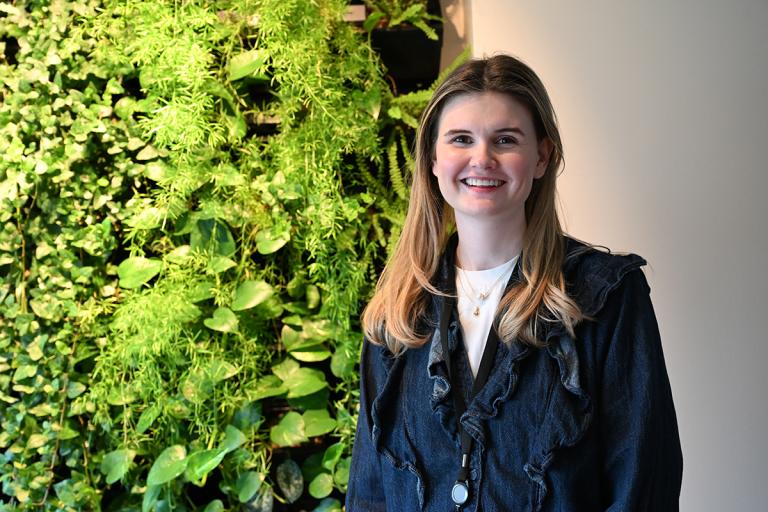
The value in design lies in the behind-the-scenes work – the research, brainstorming, collaboration and creativity.
User-centered design methodology in public administration
"It's a wonderful opportunity to use user-centered design methodology in public administration because the benefits are so significant and the impact is real. We often associate design with something appearance-related that's added to products or items to make them sell better, but that's a misconception."
The value in design lies in the behind-the-scenes work – the research, brainstorming, collaboration and creativity.
"In civic design, we invest heavily in this behind-the-scenes work so that the end result is a good experience for service users. Design centers on user experience.“
Flexibility necessary in good civic design
The role of civic design specialists at the City is to improve and redesign service processes using user-centered design methodology. The team handles either large transformation projects or smaller, focused projects, both within their department and in collaboration with other departments.
"Those of us who work as civic designers all have different backgrounds, which means we approach projects with different emphases. What forms the foundation of all our work, though, is this user-centered methodology, so the ability to apply it to both large and small projects is essential. Generally, curiosity is necessary – asking questions, listening, understanding, visualizing and making decisions. It's also important to keep experimenting, be able to change your mind and preferably not take things too seriously – but always maintain playfulness and creativity," says Björg when asked what makes a good civic designer.
She says flexibility is one of the most important traits of the job. "When we start a project, it's not always clear how to work on it, just what the end goal is. We can stretch and adapt the methodology for large and long projects but can also use it for shorter projects that take just a few days. That makes us good partners."
As civic designers, we need to be flexible, adapt and evolve with the projects.
Development of civic design within the City
Björg says the role of civic designers within the City has evolved alongside the department's growing maturity. Initially, the team worked on large and wide-ranging transformation projects that required significant teamwork with other staff, both to introduce the methodology and demonstrate its value in practice. "Today, we also work on smaller and more focused projects with more targeted goals. Knowledge of civic design has increased among colleagues, so there's less need to introduce the method from scratch."
"We constantly evaluate how we approach projects and try new methods in collaboration with others. We're always trying to figure out how we can best use our strengths. As civic designers, we need to be flexible, adapt and evolve with the projects. That's why our role is constantly changing and will likely continue to do so."
Challenge of maintaining creativity within a formal system
According to Björg, the biggest challenges of civic design in the public system lie in maintaining the playfulness and flexibility that define design. "We work within a large and formal framework where most matters need to go through a specific process and many parties, making it difficult to quickly implement ideas. It requires both vision and patience to maintain creativity under such circumstances."
Despite this, Björg says the team manages to stay true to its approach. "We always try to approach projects with playfulness and curiosity. But of course it's a challenge – especially in a system where things are planned far in advance. It would be fun to sometimes be able to put ideas into action without lengthy preparation work."
This was an important step in further establishing a user-centered approach within the City, which results in more and better services across the city.
Growth Lab results in better services across the city
When Björg looks back over the past year, it's mainly the Growth Lab that stands out – a new version of an older idea that received significant investment. "This was an eight-week service design sprint that City staff applied to participate in. We supported participants in developing solutions to real challenges at their workplace using user-centered design methods." The process was both creative and practical. Participants left the project satisfied with new knowledge ready for future projects.
"This was an important step in further establishing a user-centered approach within the City, which results in more and better services across the city."
Looking ahead
Björg says the future of civic design within the City lies in broader use. Not just for digital solutions, but for services in a broader sense.
"It's great to see how user-centered the department has become and that staff are increasingly getting into the habit of talking to service users, running tests and making decisions based on that. It would be a dream to work on even more services in other departments, especially those that don't necessarily need to be improved with a digital solution. Many staff in the City administration follow all kinds of complex processes and it makes such a difference to simplify them. With that, half the work is done – these kinds of improvements reach residents."
"We want to help people see and understand the processes they follow and how service users experience them. When people understand both of these things, a lot can change."
"We're always looking for new approaches and hopefully we'll continue to have opportunities to ask questions, test ideas and keep improving the City's services."
