Reykjavík in a strong position to lead on climate change issues
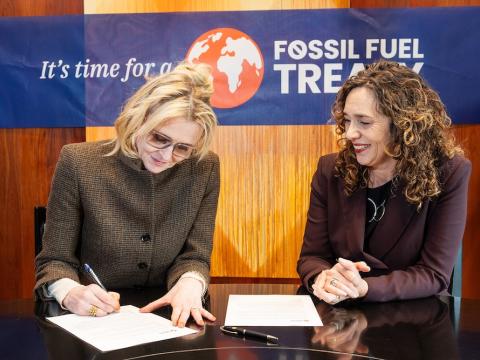
Reykjavík is answering an international call for action to reduce fossil fuel use. Mayor Heiða Björg Hilmisdóttir recently signed an agreement to that effect. Reykjavík City has joined 145 other cities, including the European capitals of London, Paris, Rome, Dublin, Amsterdam and Copenhagen, in participating in the international Fossil Fuel Non-Proliferation Treaty (FFNPT).
The City Executive Council then approved the declaration of intent at its meeting Thursday, Feb. 26.
Strengthens existing commitments
In the mayor's statement about the agreement, she notes that cities stand on the front lines of the climate crisis and that Reykjavík is in a strong position to lead by example.
"Support for this agreement aligns with Reykjavík's climate goals, including our carbon neutrality target for 2030, and builds on our leadership in clean energy, sustainable transportation and running the city without fossil fuels. This declaration strengthens Reykjavík's existing commitments and connects local actions with global cooperation to address the root of the climate crisis.
Reykjavík is ready to work with other cities around the world and encourages nations, including Iceland's government, to take an active role in international negotiations on an agreement to phase out fossil fuels and contribute to shaping a fair and global transition away from fossil fuels," according to Mayor Heiða Björg Hilmisdóttir's declaration.
Reykjavík has also signed a city climate agreement, the first of which was signed in October 2024. The contract includes 15 actions with 18 participants.
The Climate City Contract represents Reykjavík City's commitment to reach carbon neutrality by 2030, in collaboration with institutions, businesses, the university community, and residents. Contract participants have committed to developing actions that measurably reduce greenhouse gas emissions and support Reykjavík City's climate goal of becoming carbon neutral by 2030.
International initiative to strengthen the UN Climate Agreement
The Fossil Fuel Non-Proliferation Treaty is an international initiative aimed at a just, managed and funded global transition from fossil fuels (coal, oil and gas) to clean and renewable energy.
The goal is to strengthen the United Nations Climate Agreement and the Paris Agreement by specifically tackling the supply side of the climate crisis.
The initiative is led by 18 nations and is supported by over 800 parliamentarians, 146 cities, institutions such as the European Union and the World Health Organization (WHO), and over 4,200 community groups, companies and organizations worldwide. FFNPT is based on the simple but crucial fact that addressing the climate crisis requires more than just reducing emissions — it also requires limiting fossil fuel production itself.
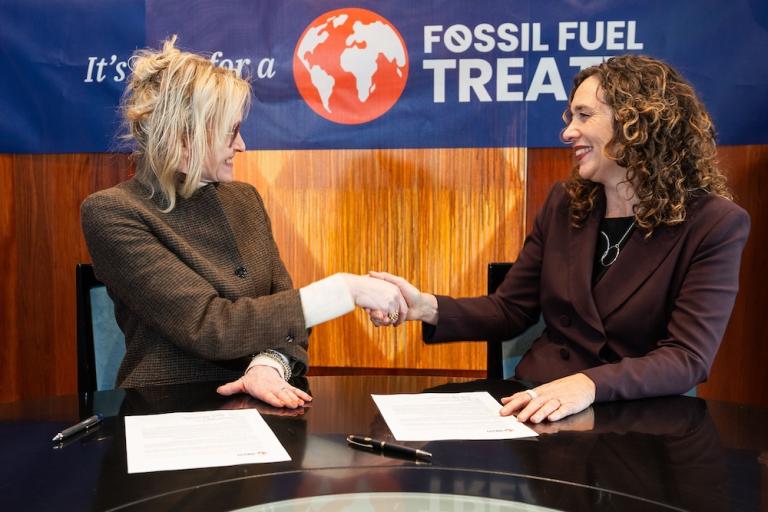
"We are thrilled to be here in Iceland to celebrate Reykjavík joining the call for an agreement to reduce fossil fuel use. Support for this cause is growing worldwide, and city participation is essential to encouraging nations to come to the negotiating table. Iceland's leadership in renewable energy is very encouraging at a time when such initiatives matter greatly. From the Arctic Ocean to the Andes Mountains, we can hear the warning calls from glaciers," says Tzeporah Berman, founder and spokesperson for the treaty.
Why does this matter for people?
Fossil fuels are the main cause of climate change and have direct effects on people's lives and health.
- Air pollution from fossil fuels causes over 7 million premature deaths annually and is linked to heart and lung diseases, cancers and other serious health problems.
- Climate change, driven by burning fossil fuels, increases the frequency and intensity of natural disasters, such as wildfires, floods and heat waves that threaten communities, housing and food security.
At the same time, the world has plenty of options to produce energy from clean, renewable sources such as solar, wind and hydropower, reducing fossil fuel use, protecting people's health and building stronger and safer communities.