
Officials call for shared policy and future vision for municipalities
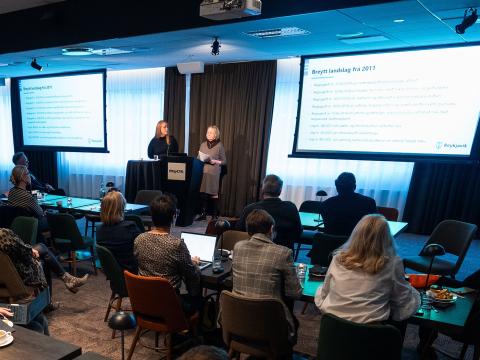
Many opportunities exist to strengthen services for disabled people, especially given recent organizational changes within the City – though challenges are plentiful. Katrín Harpa Ásgeirsdóttir, the new Head of Office for disabled people's affairs at Reykjavík City, and Aðalbjörg Traustadóttir, who recently stepped down as head of office after a long and successful career, agree on this point.
Aðalbjörg and Katrín Harpa gave a joint presentation at a recent Icelandic Association of Local Authorities conference. The conference, aimed at municipal officials and staff, created a forum for open discussion about future vision, policy making and the challenges municipalities face in providing services and upholding the rights of disabled people. The conference called for open discussion on shaping the future of this sector, with the guiding principle of developing a clear and progressive policy that ensures rights and quality services for disabled people.
Municipal obligations have increased significantly
Providing services for disabled people is one of the most extensive responsibilities of the Reykjavík City Department of Welfare. Nearly 2,000 disabled individuals receive services from the department. More than 500 individuals live in housing specifically designed for disabled people.
In their presentation, Aðalbjörg and Katrín Harpa reviewed several of the many changes to this sector's framework since 2011, when services for disabled people transferred from the state to municipalities, partly to better integrate them with social services. Municipal obligations have grown steadily since then, and most municipalities run deficits in this service sector.
Organizational changes have been beneficial
They also reviewed the extensive changes implemented following a thorough evaluation of disabled people's services commissioned by the then mayor in 2024. The changes significantly simplified the organizational structure for disabled people's services and moved operations from four centers to a central office. Divisions within the centers were closed, but counselors continue to work in service users' local communities under central office management.
The goal of these changes was to improve the quality of services for disabled people. About a year has passed since the changes took effect, and Aðalbjörg said they have proven successful. Oversight has improved, procedures have been simplified, and all services are becoming more coordinated.
Call for a shared policy and future vision
Extensive work is now underway to improve support services for disabled people. Aðalbjörg and Katrín Harpa said they have high hopes this work will result in improved services and better support for disabled people with low ratings on the Supports Intensity Scale, an assessment tool that evaluates the support needs of disabled people. The assessment results also determine allocations from the municipal equalization fund.
They highlighted additional issues and projects that need to be addressed. For example, legislation and regulations require various changes, waitlists must be addressed, the Municipalities' Social Services Act needs to be reviewed, and the Supports Intensity Scale requires legal formalization. Aðalbjörg and Katrín Harpa also discussed the importance of municipalities agreeing on a standardized assessment of basic services. Finally, the cost-sharing arrangement between the state and municipalities needs to be finalized.
They concluded by encouraging municipalities to collaborate more closely and develop a shared policy and future vision for this sector.
