Workshop on the Climate City Contract

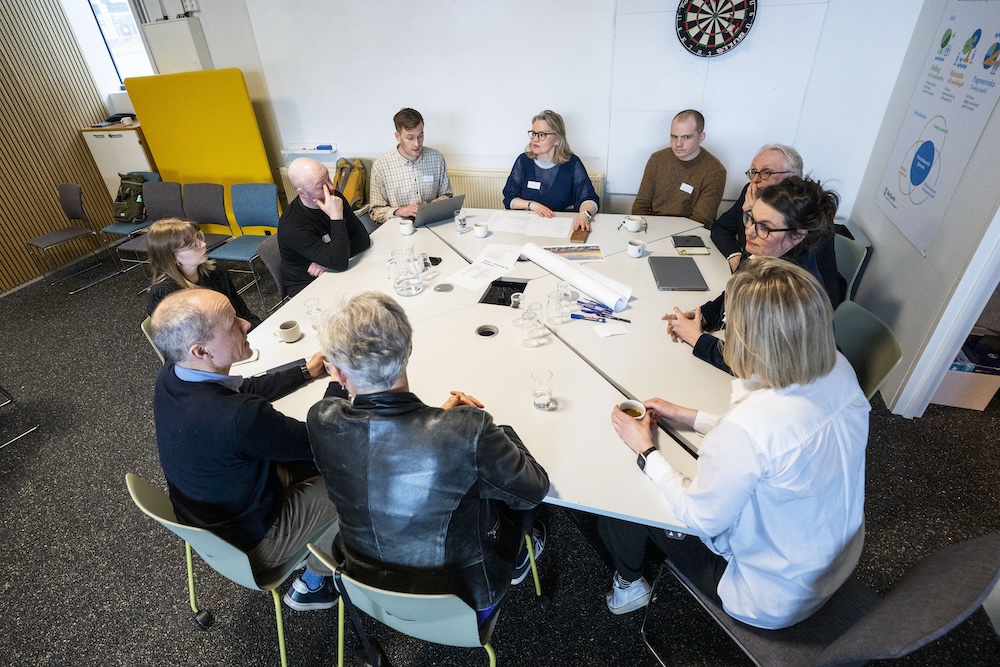
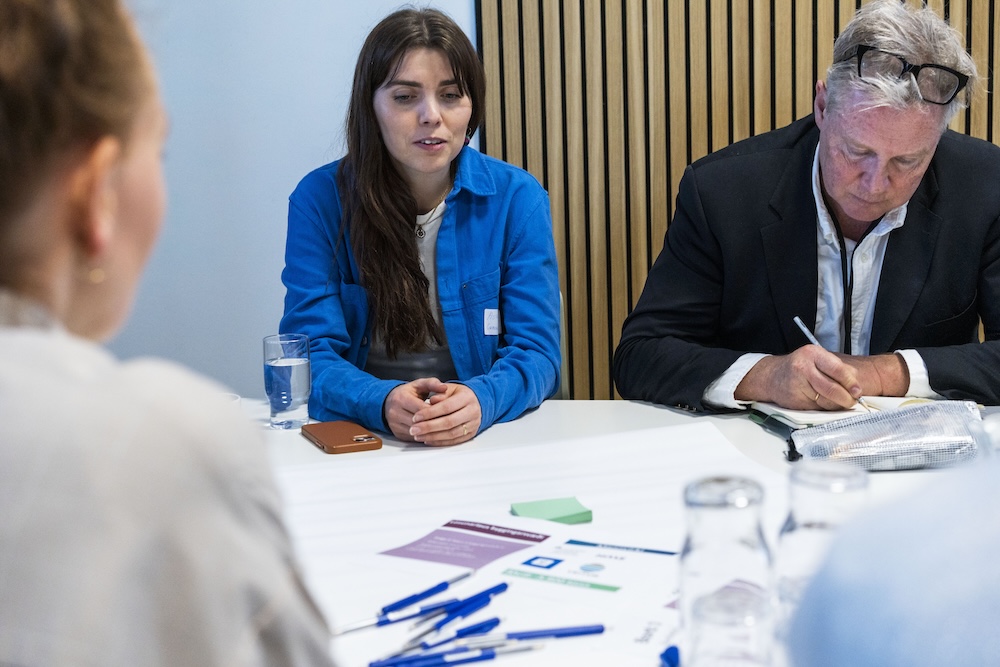
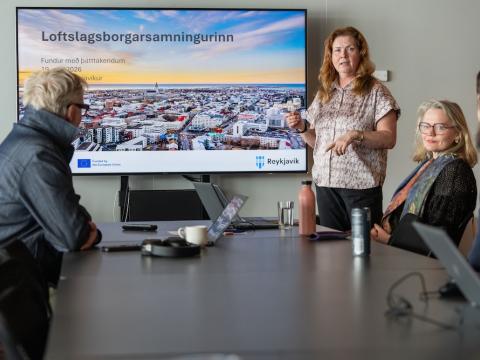
Reykjavík recently hosted a workshop for participants in its Climate City Contract. The meeting was productive, focusing on key barriers, challenges, and solutions while helping to build connections among participants.
15 actions with 18 participants
Reykjavík's first Climate City Contract was signed Oct. 7, 2024. The contract includes 15 actions with 18 participants. Contract participants have committed to developing actions that measurably reduce greenhouse gas emissions and support Reykjavík City's climate goal of becoming carbon neutral by 2030. They also committed to participating in annual consultation meetings through at least 2030. Workshops like this are part of such collaboration because the Climate City Contract should be a living document that's reviewed regularly.
Contract participants are a diverse group including publicly traded companies, civil society organizations and public authorities at both the national and municipal levels. Those signing the contract alongside Reykjavík City are the Ministry of the Environment, Energy, and Climate, Ministry of Infrastructure, Association of Municipalities in the Capital Area, Landspítali Hospital, Reykjavík University, University of Iceland, Íslenska Gámafélagið, Sorpa, Terra, Reykjavík Energy, Associated Icelandic Ports, Veitur Utilities, Festa, Strætó Public Transport, Housing and Construction Authority, Green Building Council Iceland, the Confederation of Icelandic Industries and Visit Reykjavík.
Priorities and actions in the Climate City Contract
At the workshop, participants formed groups focused on specific climate action areas. One group had an open theme, another focused on planning and energy transition, a third on structures, and the final group covered transportation.
Reykjavík has had a climate policy since 2009, but the City first established the goal of carbon neutrality by 2040 after the 2015 Paris summit. Reykjavík became one of Europe's Climate Cities in 2022, at which point work began on the Climate City Contract. The contract is based on the City's participation in a European initiative involving 112 carbon-neutral and smart cities by 2030, a project for which nearly 400 cities applied.
The Climate City Contract has five main priorities:
- Transportation, changing travel habits and infrastructure for public transit, walking and cycling.
- Energy transition in road transportation and Reykjavík Harbor.
- Waste management and the circular economy.
- The construction sector. Reykjavík has ambitious development plans, making it crucial that this growth has a minimal climate impact.
- Just transition.
Large climate experiment
Reykjavík City is responsible for the Climate City Contract, but at its core, it is a large-scale collaborative effort. The goal of the European project is not only for these 112 climate cities to become carbon-neutral by 2030 but also to ensure they become hubs of research and innovation, helping all other European cities achieve the same goal by 2050. Participants are therefore taking part in a large climate experiment. While climate cities do not receive direct financial support for participating in the European initiative, they do get guidance and oversight from Net Zero Cities.
Climate cities can apply for grants to implement actions outlined in the Climate City Contract. As a designated "mission city," Reykjavík has gained access to grant funding that would not otherwise be available. Reykjavík has received two grants worth 90 million ISK each. One grant, for which Reykjavík serves as a Pilot City in partnership with the University of Iceland, covers transportation and waste management; the recent workshop was also part of this project. The second grant was awarded to accelerate transitions (Enabling City Transition) with VSÓ as a partner in that project. Additional grant opportunities for climate cities are expected to become available later.
Next steps
The Climate City Contract has been undergoing review by European Union consultants since it was signed in October 2024. As of this writing, it is unclear when the Climate City Contract will receive its official EU Mission Label. Once this approval is granted, further details will be released and the contract will be made public.
Photos from the workshop