Workplace competition – Reykjavík City pilot project

Reykjavík City recently ran a pilot project where the four largest workplaces in Vatnsmýri participated in a fun competition to encourage alternatives to driving.
Staff at the University of Iceland, Reykjavík University, Landspítali Hospital (Skaftahlíð) and Reykjavík City (City Hall) logged their trips using an app that tracked their mode of transport each day. The goal was to see whether this type of project could encourage company employees to reduce car trips to and from work. The project also aimed to collect data that would help develop a larger program.
In total, 147 employees participated. Participants could win prizes, and their chances of winning increased the more often they chose transportation options other than private cars.
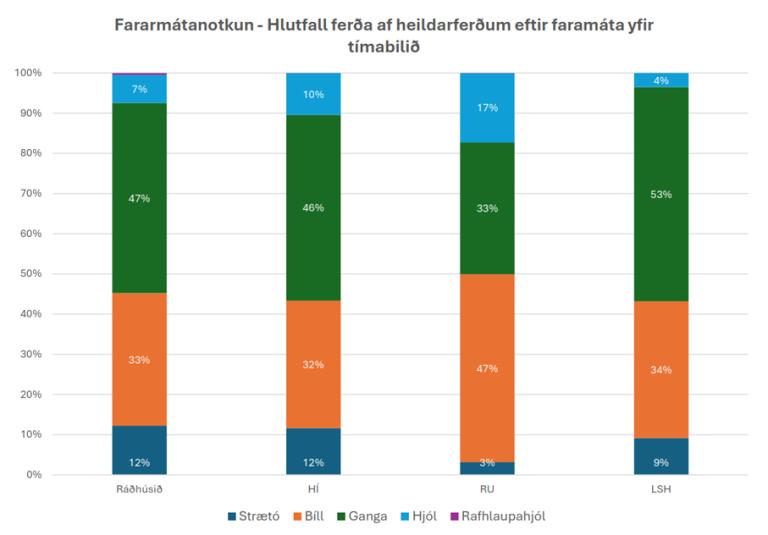
The competition between workplaces was tight, but the University of Iceland emerged as the winner, with only 32% of trips made by participants being by private car. The other workplaces followed closely behind.
Congratulations to the University of Iceland on their outstanding results!
The project was part of a larger Reykjavík City pilot program, and the results will help design a larger, more targeted initiative project that additional workplaces can join.
Student research
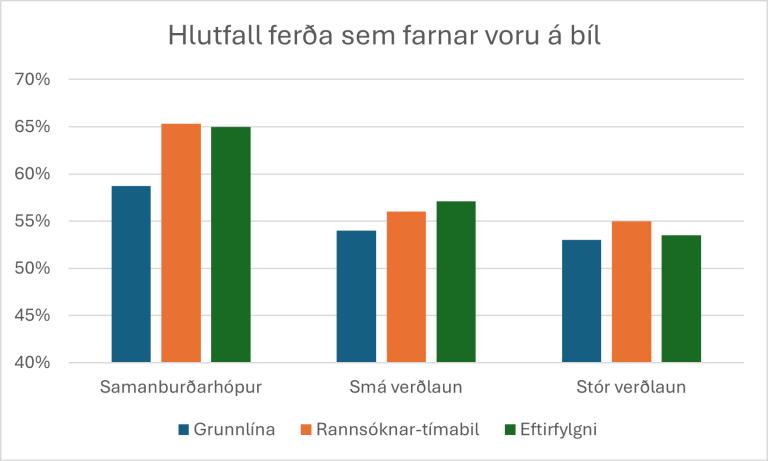
Alongside the workplace competition, researchers studied travel habits among students at the University of Iceland and Reykjavík University. Students first participated in a one-week baseline study of their travel habits. They were then divided into three groups:
- Control group, which received no rewards
- Research group A, which could win smaller prizes for environmentally friendly trips
- Research group B, which could win larger prizes for environmentally friendly trips
Eligible eco-friendly modes of transport included walking, cycling, electric scooters, and city buses.
While the difference wasn't statistically significant, results showed that both research groups increased their car use far less than the control group between the baseline and study periods – and these effects lasted for months after the study concluded during the follow-up period.
What's next?
Reykjavík City will now continue developing the project, using lessons learned from the trial and creating new ways to encourage more people to try different commuting options in their daily lives. The city plans to run several more small-scale trials before introducing the final project and inviting more workplaces to participate.