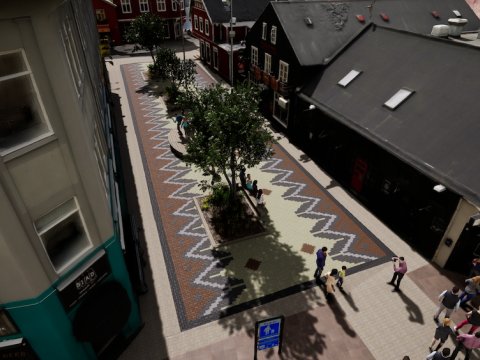
Reykjavík's urban design policy approved by City Council

The City Council unanimously approved Reykjavík's new urban design policy yesterday. The policy's main goal is to create a people-focused and sustainable city that strengthens community, reflects our cultural heritage, and provides diverse opportunities for all residents. The policy calls for clearer positions on future development projects and provides a framework for decision-making and implementation that supports planning, environmental goals, and resident welfare.
The steering group began its work nearly two years ago, led by Chair Dóra Björt Guðjónsdóttir, Líf Magneudóttir, Hjálmar Sveinsson, Aðalsteinn Haukur Sverrisson and Kjartan Magnússon.
Public consultation completed
The policy has been presented through the City's Consultation Portal. The draft policy was first reviewed by staff from the Department of Environment & Planning and received feedback from professional organizations: the Icelandic Association of Landscape Architects, Architects Association of Iceland and Híbýlaauður.
Ten comments were received through Reykjavík's Consultation Portal when the policy was posted for review in October. The Icelandic Disability Alliance, Icelandic Road and Coastal Administration, Planning Agency, Association of Municipalities in the Capital Area, Transport for All, board of Icelandic Cyclists' Federation, Housing and Construction Authority, Hjólreiðabændur, Green Building Council Iceland, Icelandic Car Owners Association and the Ministry of Social Affairs and Housing were directly notified that the policy was available in the Consultation Portal. Two of these eleven parties submitted comments: the Icelandic Road and Coastal Administration and the Icelandic Disability Alliance.
Policy welcomed in comments
Many comments didn't relate to the policy itself but addressed other planning and environmental projects in Reykjavík. Comments about excessive density and other development-related issues are already addressed in the policy. Substantive comments came from the Icelandic Disability Alliance and Reykjavík Forestry Association, among others.
The steering group reviewed the comments and found that while many concerns were already addressed in the policy, greater clarity was needed in some areas. The group easily clarified several points without making any major substantive changes.
The review showed the policy was universally welcomed and considered ambitious and positive, with particular emphasis on sustainability and human-centered urban environments. In some cases, commenters called for measurable goals and clear accountability for the policy's implementation, points which officials say will be addressed during the implementation phase.
Policy implementation
- A checklist is being developed that outlines all measurable goals of the policy.
- The checklist will include a rubric so each measurable goal is given a specific weight in the planning process.
- The City will provide training on using the policy for planning, and will then implement and test it in that context.
- When Reykjavík's municipal plan is next updated, the urban design policy will be incorporated as one of the core policies.
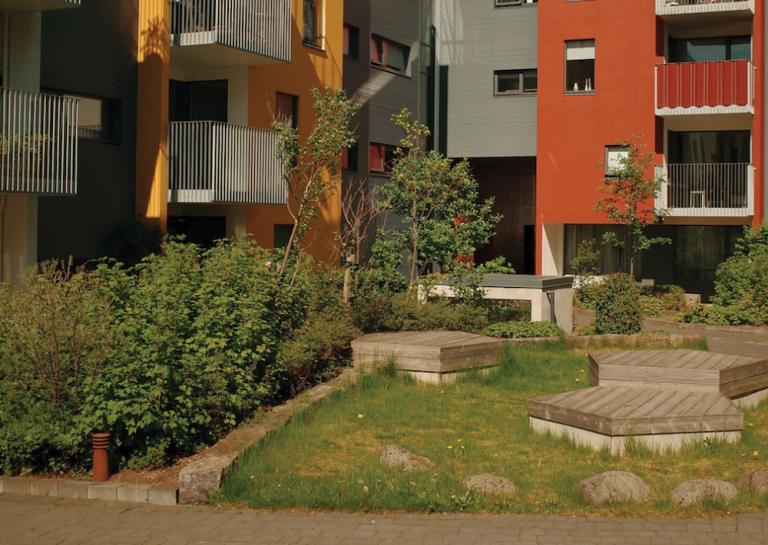
Who is the policy for?
The policy is for everyone involved in the City's planning and design, whether property owners, developers, designers or city employees. The policy is also important as a promise to residents about the principles that must be upheld as the city develops on their terms, and it outlines the key factors in designing and planning a successful city.
The policy is also an educational document for anyone interested in urban design and planning cities and towns, and how we can consider environmental factors from a human perspective and human needs. People come first — they create society, and it's our responsibility to nurture it. The policy also supports the city's environmental, social, and economic sustainability.