
Reykjavík City operations turnaround exceeds 14 billion

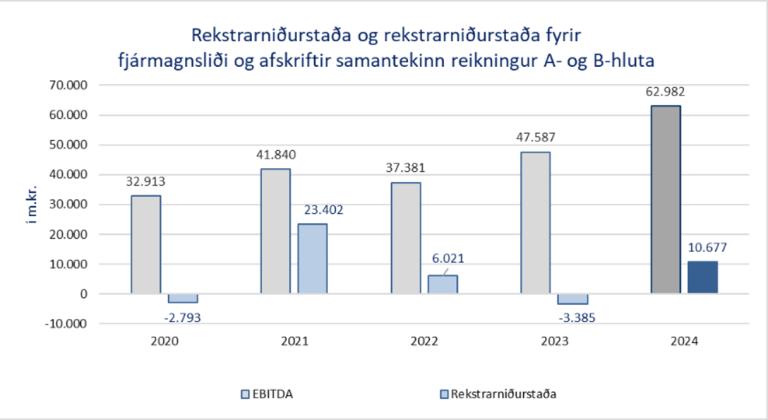
Reykjavík City's combined Section A and B operations for 2024 showed a positive result of 10.7 billion ISK, which is 14.1 billion better than in 2023. The Section A Core Operations showed a positive result of 4.7 billion, representing a 9.7 billion turnaround from the previous year. The debt ratio has also decreased. The annual financial statement was presented to the City Executive Council today and referred to the City Council.
City's core operations yield 4.7 billion surplus
Section A Core Operations results for 2024 were positive by 4.7 billion ISK, which is 9.7 billion better than in 2023. The 2024 budget had projected a positive operating result of 650 million ISK.
The turnaround in Section A operations can be attributed partly to revenues increasing by 10.2% while operating expenses grew by only 7.6%, excluding depreciation and changes in pension liability expenses. Pension liabilities for Section A decreased between years, resulting in income of 847 million ISK. Other aspects of the budget were largely on target.
Section A positions averaged 8,606 in 2024, changing minimally from 2023.
"It's crucial that we continue to improve and prioritize investments and services for the people of our city, for a sustainable and just future for our community."
Strong consolidated financial position
The operating results for Sections A and B were 3 billion ISK better than projected in the annual budget. Associated Icelandic Ports, Reykjavík Energy, the Capital Area Fire Department and Strætó Public Transport, along with the City's Section A, all delivered better results than anticipated. The most significant improvement came from Section A, which is funded by tax revenues, performing about 4 billion better than projected. Reykjavík Energy's performance exceeded projections by nearly 3 billion, while Associated Icelandic Ports exceeded projections by 815 million ISK, largely due to increased port service revenues. Félagsbústaðir Social Housing performed below projections as investment property valuation changes were lower than anticipated, though the company's earnings before interest, taxes and depreciation (EBITDA) were stronger than projected. SORPA waste management performed below projections due to higher-than-anticipated depreciation.
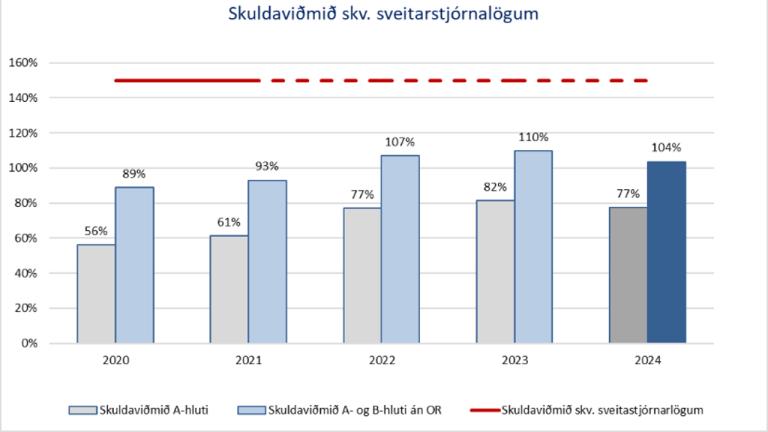
The debt ratio for Sections A and B, according to Article 64 of the Local Government Act and Regulation 502/2012 on financial benchmarks and municipal financial oversight, decreased to 104% at the end of 2024 from 110% in 2023. The Section A debt ratio was 77%, five percentage points lower than the previous year.
Important to reduce inflation and interest rates
Reykjavík City's external operating environment in recent years has been characterized by labor market expansion, persistent inflation, and high interest rates. In 2024, inflation began to subside, measuring 4.8% in December. Simultaneously, the Central Bank of Iceland began lowering its policy rate, which stood at 8.5% at year-end. According to the Central Bank of Iceland, inflationary pressures remain, requiring continued tight monetary policy control and caution in interest rate decisions.
Developments in the coming months will largely depend on how successfully inflation and interest rates can be reduced without overcooling the economy. Long-term agreements have been reached with a large portion of the labor market, increasing predictability in wage developments. Municipalities strongly supported the collective wage agreements by reducing fees and participating in free school meals. There are warning signs in the global economy, both due to tariff plans and armed conflicts. Significant uncertainty remains about how these factors will affect the domestic economy.
Developments in the coming months will largely depend on how successfully inflation and interest rates can be reduced without overcooling the economy.
Important steps in financial relations with the national government
Challenges in Reykjavík City's operations include responsibilities transferred from the national government to municipalities without adequate funding. Progress has been made in funding disabled services with municipal tax increases of 0.22% in late 2022 and 0.23% in late 2023. However, findings from a working group report by national and local governments on funding this sector show that full long-term funding is still lacking.
In March 2025, an agreement was signed between the national government and municipalities regarding services for children with complex needs and nursing home development.
Investment in school maintenance and infrastructure development
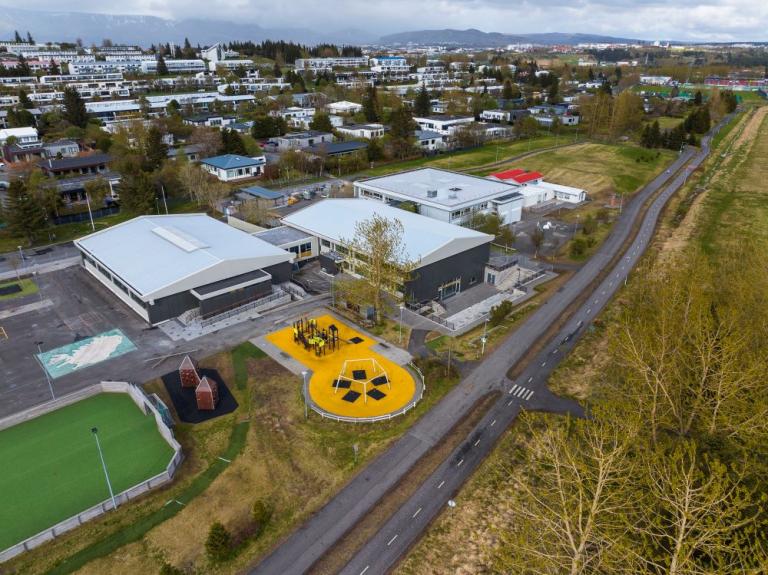
Investments in 2024 totaled 20.7 billion and were largely characterized by a school maintenance initiative and infrastructure investments to support housing development. Investments were financed with loans totaling 16.2 billion, through both bond issuance and borrowing from the Council of Europe Development Bank.
Reykjavík City plans to finance 2025 investments with borrowing of up to 16.5 billion ISK. The borrowing is expected to occur through bond issuance in the bond market, direct loans, or other means to meet the Reykjavík Municipal Treasury's financial needs at any given time. Decisions about each bond offering will be made in advance, considering loan terms, project status, and financial needs at that time.
Continued fiscal restraint
The Reykjavík City budget for 2025‐2029, approved on Dec. 3, continues to demand strong fiscal restraint. The budget is based on Reykjavík City's 2023‐2027 financial policy, with clear priorities and objectives that have been strictly followed. Financial policy metrics for Section A show gradual improvement, with policy objectives expected to be achieved in 2025.
"Reykjavík City is a strong municipality in rapid growth where the emphasis is on creating a green city where we can all find our place and feel that we all matter
Important to prioritize investments and services for people in the city
"Reykjavík City is a strong municipality in rapid growth where the emphasis is on creating a green city where we can all find our place and feel that we all matter," says Mayor Heiða Björg Hilmisdóttir. "It's gratifying to see Reykjavík City's operations developing better than projected. I want to thank the city's staff and my colleagues in the City administration."
The first discussion about the 2024 annual financial statement will take place in the City Council on May 6.
