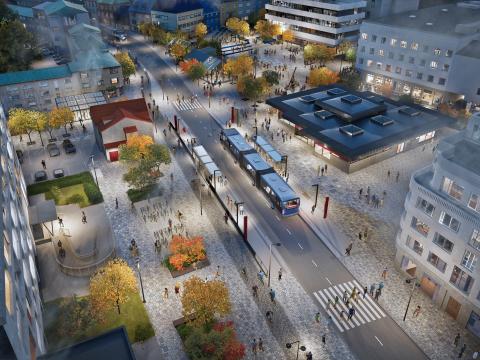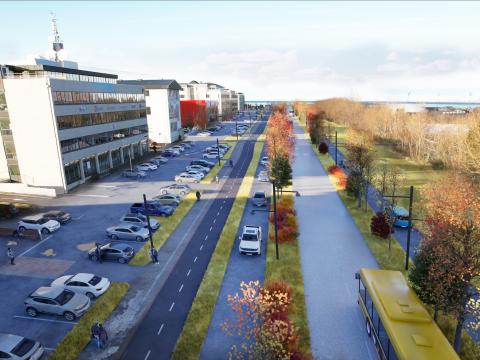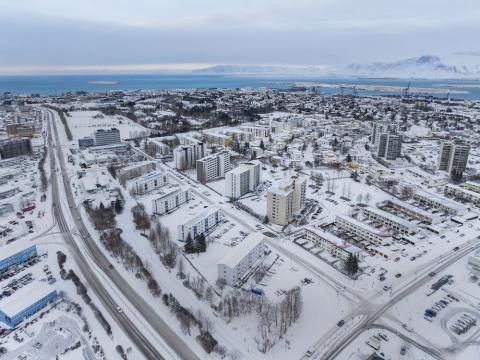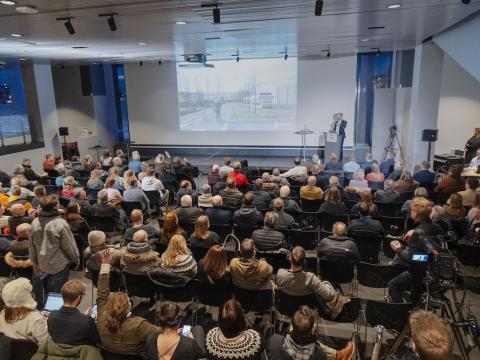
A well-attended informational meeting about CityLine was held at Reykjavík City Hall yesterday. The meeting went well, with attendees responding positively to the presentations and showing strong interest in the topic, which covered the first phase of CityLine running between Ártúnshöfði and Hamraborg. The meeting aimed to present the environmental impact assessment report for this first rotational period, introduce municipal plan framework proposals, and discuss this important project overall. A recording of the meeting is now available online.
The meeting aimed to present the environmental impact assessment report for this first rotational period, introduce municipal plan framework proposals, and discuss this important project overall. A recording of the meeting is now available online.
The presentations were given in this order:
- Mayor Einar Þorsteinsson opened the meeting
- CityLine in context – Atli Björn Levy, head of CityLine project office
- Presentation on municipal plan – Stefán Gunnar Thors from VSÓ ráðgjöf
- Presentation on environmental assessment – Rúnar Dýrmundur Bjarnason from COWI
- Address – Dóra Björt Guðjónsdóttir, chair of the Environment and Planning Council
- Questions and discussion
Gunnar Hersveinn moderated the meeting.
After the meeting, attendees had the opportunity to discuss their concerns about the CityLine with various experts. Tablets were also available for attendees to review the data.
Available in the Planning Portal
The environmental impact report and planning proposals are available on the Urban Planning Portal, where anyone can review the documents and submit an official statement. The documents were uploaded in November. The deadline for comments is January 25, 2025.
The CityLine is a new public transportation tying the city and neighboring municipalities together, improving the quality of life and simplifying daily life. With it we strengthen infrastructure, make a great city even better, and take vital steps in addressing climate change issues and improving public health.