Assessment of greenhouse gas emissions in Reykjavík 2024
Community greenhouse gas emissions in Reykjavík reached 614,000 tons of CO₂ equivalent in 2024, representing a 1.5% increase from 2023.
This increase is primarily due to higher emissions from waste treatment, with the majority from waste landfilled through 2023 that continues to release emissions, plus mixed household waste sent abroad for incineration in 2024.
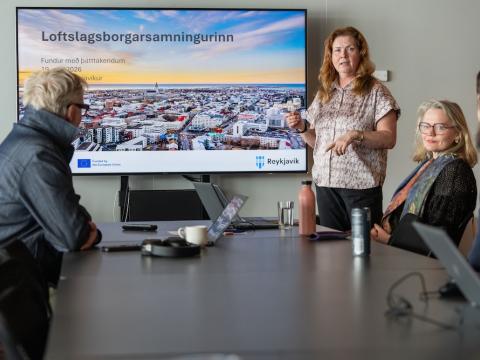
Reykjavík's greenhouse gas emissions are compiled annually using updated methods and improved data. The compilation aligns with Reykjavík City's commitments through the international Global Covenant of Mayors for Climate and Energy and the city's participation in the European project involving 112 carbon-neutral and smart cities by 2030.
Transportation is the main source of emissions
About 42% of total emissions in Reykjavík in 2024 came from road traffic, accounting for roughly 263,000 tons of CO₂ equivalent. Transportation overall, including shipping and aviation, accounts for about 52% of the city's total emissions, or nearly 320,000 tons of CO₂ equivalent.
However, the energy transition in transportation is accelerating. The percentage of kilometers driven by electric vehicles has grown substantially in recent years, reaching about 12% in 2024 compared to 7% in 2023 and just 1% in 2019.
This trend, combined with approved policies for a walkable and bike-friendly city and public transit development under the capital area's Transportation Charter, supports the goal of lowering transportation emissions.
Construction industry plays key role
Construction industry emissions represented 13% of Reykjavík City's total emissions in 2024, or about 81,000 tons of CO₂ equivalent. Of that total, 70,000 tons were related to building materials and 11,000 tons came from fuel use during construction projects.
Reykjavík City participates in the Building a Greener Future collaboration, where government and construction industry stakeholders collaborate on more environmentally friendly building practices. Starting Sept. 1, 2025, building regulations will require emissions analysis for most new buildings, which will increase transparency and encourage more environmentally friendly approaches.
Waste emissions grew
Total waste emissions increased 13% in 2024, reaching about 86,000 tons of CO₂ equivalent. While landfill disposal has decreased significantly over the past two years, emissions from incineration abroad have increased. Emissions from waste landfilled in previous years and decades continue to be released, slowing the overall reduction in emissions.
Reykjavík City is one of 112 cities selected to participate in the European collaboration for carbon-neutral and smart cities by 2030. Part of that project involves work on the Climate City Contract, a collaborative agreement between the city and a wide range of community partners on actions to reduce emissions and accelerate the energy transition.
The goal is for Reykjavík to become carbon neutral by 2030, in line with the Paris Agreement and the European Union's vision of a carbon-neutral continent by 2050.