
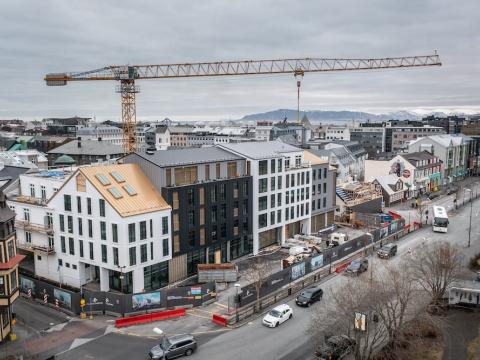
Reykjavík City has implemented a new fee schedule for usage permits and monitoring. The schedule is divided into five categories based on the scope of use and whether it involves activities on municipal land like events or facility installation, or surface disruption. Municipal land includes all land areas owned by Reykjavík City, including streets, sidewalks, paths and open spaces.
Smaller activities and events now free
Each scope category covers specific tasks for both issuing usage permits and monitoring. Work hours are estimated for each task based on consultant hourly rates in the general market.
Usage is divided by scope into minor and major facility installation and events, and minor and major construction projects, with pricing set accordingly. The price range is broader than before and reflects the work involved. Scope category 1 for minor facility installation costs 38,600 króna, while major construction projects in scope category 4 cost 772,000 króna.
Scope category 5, which covers minor activities and events on municipal land, is free of charge. Other categories include an additional 14,900 króna administrative fee.
Incentive to reduce usage time
Usage permits provide temporary authorization to use municipal land for various activities like surface disruption or events. To emphasize this goal, each permit will be issued for a maximum of one year. This means if usage lasts longer than one year, a new fee will apply.
This policy limits usage duration as much as possible and builds an economic incentive into the fee schedule to reduce usage time. This policy is crucial because construction in sensitive areas like the city center often causes significant disruption for all pedestrians and drivers.
The purpose of issuing usage permits
The purpose of issuing usage permits and monitoring has four main components:
- To ensure the safety of all pedestrians and drivers.
- To manage traffic flow related to these activities so pedestrians and drivers can travel with minimal disruption and various uses don't overlap.
- To ensure residents and visitors receive information about usage activities on municipal land, providing near real-time updates on what's happening, what construction is underway, and why at any given time.
- To maintain the value of municipal land by preventing usage from causing premature deterioration of city property that could reduce the value of surfaces and substrates.
About 1,500 usage permits issued each year
About 1,500 usage permits are issued annually, and demand is growing. At the same time, the number of suggestions, monitoring, and inspection visits is also increasing. The previous fee schedule did not cover the actual costs of operations and necessary administration for this area.