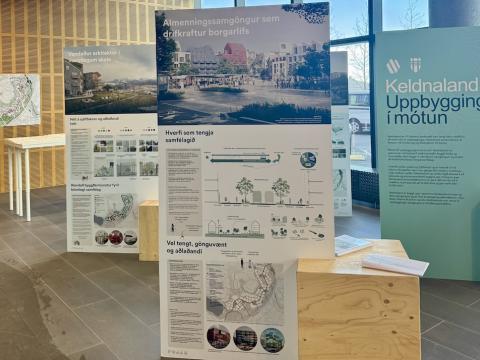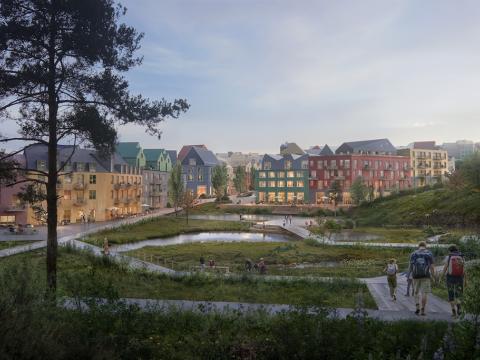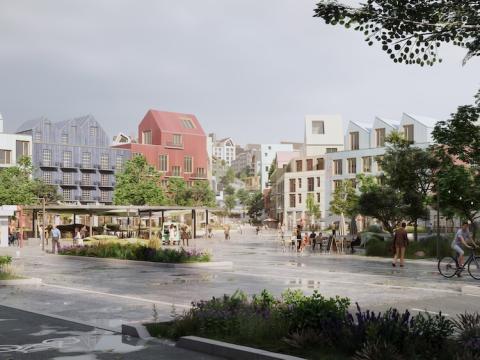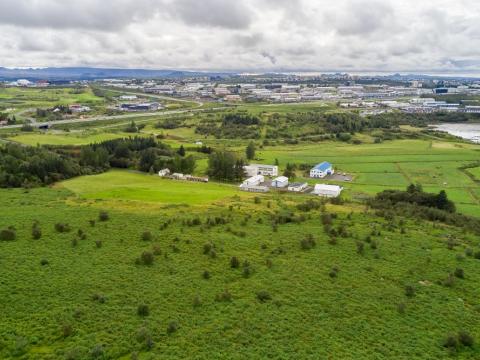
Reykjavík City and Transport for the Capital Area are launching an international competition today for the development of Keldnaland. The competition is intended to find high-quality proposals and interdisciplinary teams for the work ahead in the area's development plan. Keldnaland is a 116-hectare area where the goal is to create an exciting, modern neighborhood built around green transportation that contributes to a carbon-neutral urban community.
The competition brief is available on Reykjavík City's website, and all competition documents are available on the City's procurement website. Competitors must register on the website to participate and ensure they receive all information about the competition.
Five teams to develop proposals in the second stage
The competition has two stages and anonymity is maintained in both stages. The first stage will end on April 19, 2023. We plan to select up to five teams to develop proposals at the second stage. The second stage will end on August 18, 2023 and each team will be paid a €50,000 commission for its work in that stage. In addition, the most successful proposal will be awarded a prize of €50,000.
Rather than submitting detailed designs that resolve every aspect of planning for the entire area, competitors should aim to present a framework for major infrastructure, such as CityLine and green spaces, a realistic plan for the area's development and construction, and key design guidelines.
After the competition, the client expects to negotiate a consulting agreement with the team behind the proposal the selection committee considers strongest. The consulting work will involve further shaping the development program and development plans, to the extent that the team's expertise benefits the client.
Selection committee appointed
The competition's selection committee has been appointed. Members include Brent Toderian and Maria Vassilakou, who have helped shape Vancouver and Vienna, cities frequently named among the world's most livable. The competition is one of the largest ever undertaken in Iceland and introduces new approaches to neighborhood development in the city.