
Reykjavík City and the government unite on development in key areas
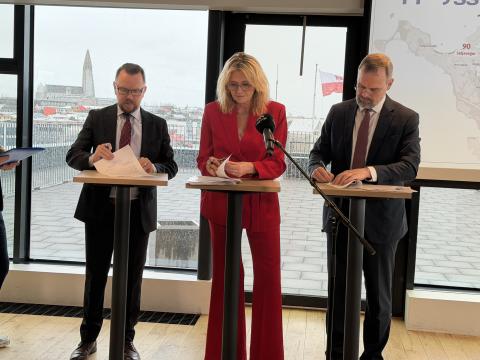
Reykjavík City and the government announced a major partnership today to develop residential and commercial properties in key areas across the city. This collaboration includes development contracts for new homes on state-owned lots, a land-swap agreement between the government and the City, and a letter of intent for the future development of a new area. Altogether, these plans will deliver between 1,200 and 1,400 new homes.
Officials announced the initiative at a joint press conference outlining key projects and next steps.
Development in prime locations
The partnership involves five development contracts on state-owned lots, paving the way for up to 800 new homes. These agreements cover several prominent lots slated for mixed-use development, combining residential units, services, and commercial activity.
Key sites include:
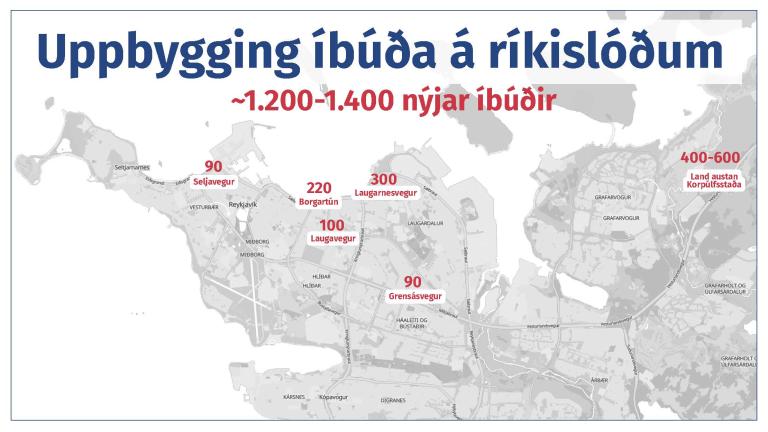
- Grensásvegur 9, where part of the existing commercial space will become residential units alongside additional planned construction. The goal is to create roughly 90 homes within the existing building, leaving room for future expansion.
- Laugavegur 164-166, the former site of the Directorate of Internal Revenue and other offices. Plans call for mixed-use development featuring about 100 homes in the existing structure, with the potential for greater density.
- Laugarnesvegur 91, where up to 300 homes will be built on the Iceland Academy of the Arts grounds alongside broader development in the surrounding area.
- Borgartún 5-7 and Guðrúnartún 6, where expanded building rights will increase the number of planned homes from 120 up to 220.
-
Seljavegur 32 and the block near Mýrargata and Ánanaust, which will feature around 90 homes and a preschool in the interior courtyard.
For every site, a new or amended land-use plan will be developed in collaboration with Reykjavík City; construction is expected to start shortly thereafter and finish within 36 months of the building permit being issued. While the final scope of development at each location depends on its respective land-use plan, these projects represent a significant boost to the housing supply over the coming years. Approximately 20% to 30% of these units will be affordable, encompassing affordable rental housing, properties eligible for equity loans, student housing, Félagsbústaðir Social Housing rentals, housing for older adults, and dwellings in building cooperatives.
Land swaps
Alongside the development contracts, officials announced a land-swap agreement between the government and Reykjavík City. These exchanges transfer land between both parties to optimize it for planned projects and accelerate construction timelines.
Under this agreement, Reykjavík City receives lots that support residential development, transportation infrastructure like the CityLine, and other activities on municipal land. In return, the government secures lots tied to key initiatives, including expanding the Stuðlar treatment facility in Grafarvogur and building a new secure residential unit at Hólmsheiði near the prison.
These land swaps are therefore essential for ensuring development moves forward in the right locations at the right time.
Development of Blikastaðaland
The parties also signed a letter of intent to develop Blikastaðaland, an area east of Korpúlfsstaðir on the border between Reykjavík and Mosfellsbær. Current plans outline development across roughly 20 hectares to yield between 400 and 600 homes. Planners expect at least 30% of the homes in this area to be affordable.
Though still in its early stages, this project marks a crucial step toward expanding the long-term supply of buildable lots.
Part of a broader housing campaign
This partnership between the government and the City is part of a broader campaign to address the growing demand for housing. These agreements aim to streamline processes and establish clearer conditions for development, ultimately allowing builders to break ground faster.
"These agreements demonstrate what we can accomplish when the government and the City work together in earnest on housing. The City's majority has prioritized a diverse housing supply, faster development, and maximizing available land — all in line with the Reykjavík City Housing Plan. We are laying the groundwork for more than a thousand new homes for residents while ensuring a portion of them will be affordable rental housing for those who need it most. "This collaboration will deliver more homes, a stronger community, and a more robust housing market," said Heiða Björg Hilmisdóttir, mayor.
- News on the Government of Iceland website
- Slides from the press conference
