
Need for more diverse services to address changing social structures
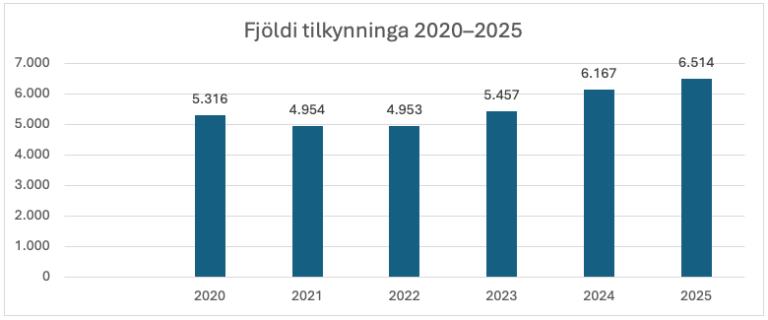
Reports to Reykjavík Child Protection Services have grown in recent years and jumped sharply in 2024 and 2025. The director of Reykjavík Child Protection Services believes the increase stems from greater public discussion, children facing more severe problems, a more complex society, and repeated reports about some children.
The number of children reported to Reykjavík Child Protection Services is not growing at the same rate as the number of reports. According to Elísa Ragnheiður Ingólfsdóttir, director of Reykjavík Child Protection Services. She believes this happens partly because the same children are reported repeatedly to child protection authorities, as their problems are more severe than before.
Extended wait times for services also play a role. This happens partly because while waiting for treatment openings, only less intensive options are available, which are often not enough. This applies, for example, to young people who show risky behavior and need long-term treatment through programs at The National Agency for Children and Families. There's also a need for more diverse services to adapt to changes in society.
Sixty staff members fill diverse roles at Reykjavík Child Protection Services
Reykjavík Child Protection Services runs extensive operations, employing 60 people in about 58 full-time positions. The staff includes social workers, psychologists, lawyers, administrative staff, and counselors. The mission of Reykjavík Child Protection Services is to ensure children's rights to protection, care, and welfare. This is done by providing necessary assistance to children and families through support programs, but may also involve using mandatory interventions to protect children.
Elísa says such a sharp increase in reports affects all operations at Reykjavík Child Protection Services and adds pressure on staff. She noted that while the number of children being reported isn't growing as fast as the reports themselves, the problems these children face are often more serious than before. This is most evident in the number of children's cases that were opened following reports or were already being processed when reports arrived—about 200 more in 2025 than in 2024, as the following chart shows:
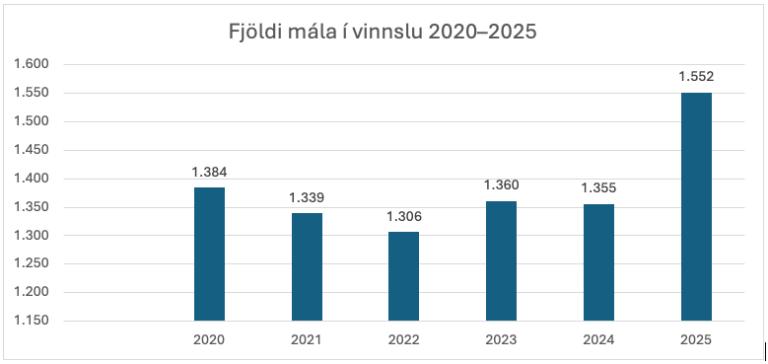
Cases at Reykjavík Child Protection Services are therefore growing, and they are extensive and complex, demanding much from staff who deserve recognition for their work on behalf of children and families in Reykjavík.
Key support programs expected in coming months
Elísa said the lack of resources for young people with complex problems is a major concern. However, she said upcoming changes should bring significant improvements. For example, the treatment facility at Lækjarbakka is expected to reopen in February, and The National Agency for Children and Families recently created a special treatment division to further strengthen its services. That division is working to create programs for children and young people with complex problems, a development she described as long overdue.
Need for a more diverse group of foster parents
In her review, Elísa also stressed the importance of increasing the number of foster parents and diversifying their backgrounds. Reykjavík Child Protection Services has shared this assessment with The National Agency for Children and Families, which evaluates those who want to become foster parents, provides training for them, and maintains a registry of those licensed to take children into foster care. She emphasized that it is crucial for children of foreign background to have opportunities to maintain their native language and culture, even when placed in foster care.
Focus on interdisciplinary teamwork
Elísa described ongoing improvements in child protection operations. The agency places a strong emphasis on professional administration and interdisciplinary teamwork, especially in cases requiring difficult decisions about family and child matters. In this context, Reykjavík Child Protection Services' size represents a major strength, with a large and cohesive group of professionals. At the same time, significant challenges arise from the growing reports and cases being processed by the agency. In recent years, the agency has placed a strong emphasis on implementing processes related to the Child Prosperity Act and Better City for Children, which is Reykjavík City's approach to implementing the Child Prosperity Act. Meanwhile, extensive discussions are underway about improving services within the city's centers so that fewer children's cases need to be referred to child protection services. Preparations are also underway to implement the Signs of Safety (Merki um öryggi) methodology, which The National Agency for Children and Families manages.
Elísa reviewed the situation at Reykjavík Child Protection Services during a Welfare Council meeting last week. The meeting minutes from that session are available here.
