
Letter of intent signed on future home for Iceland Academy of the Arts in Stakkahlíð
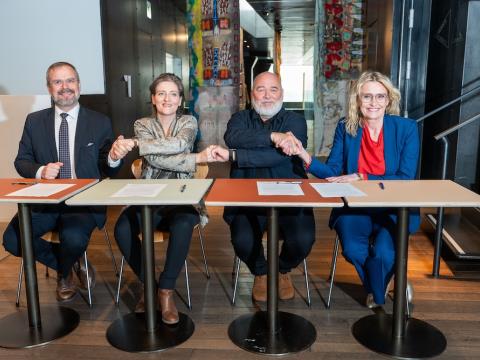
The minister of culture, innovation and higher education, the minister of finance and economic affairs, the mayor of Reykjavík, and the university president of Iceland Academy of the Arts signed a letter of intent today regarding the academy's future location in Stakkahlíð. The signing took place at Reykjavík Art Museum, where the academy's graduation exhibition opened.
For years, officials have worked to find a permanent solution to the space needs of Iceland Academy of the Arts, aiming to bring all its programs under one roof for the first time in the institution's history. Following a review of several options, stakeholders have identified a viable location for the academy's future. This letter of intent formally sets aside previous plans to relocate the academy to the Customs House (Tollhúsið) and Skólavörðuholt. Those alternatives would have taken longer to complete, required more extensive construction, cost more, and offered fewer opportunities for future development.
The Stakkahlíð development will unite all divisions of Iceland Academy of the Arts under one roof. The academy currently operates across four buildings, including one in Stakkahlíð. A recent needs assessment confirmed that the existing Stakkahlíð facilities are well suited to the academy's wide-ranging requirements. Current plans call for renovations and an expansion to permanently house the academy's operations on the site. The first phase features substantial renovations to the existing building to support academy operations. The second phase includes new construction to accommodate specialized academy functions that the needs assessment determined cannot fit within the existing structures.
Reykjavík City intends to fast-track its review of the area's land-use plan to allow for the construction of these future facilities. The City also plans to waive building rights fees for the existing Stakkahlíð property since the academy provides a public service.
Officials expect to finalize a planning statement for the future development of the Laugarnesvegur site—where the academy's current facilities are located—no later than November. All state proceeds are expected to fund the significant investment of permanently establishing Iceland Academy of the Arts in Stakkahlíð, including all associated construction. The minister of culture, innovation and higher education will work to ensure the next budget and financial plan allow Iceland Academy of the Arts to cover the costs of leasing the renovated Stakkahlíð facilities and funding future construction.
