
From vision to reality
Department of Service and Innovation Annual Report 2025
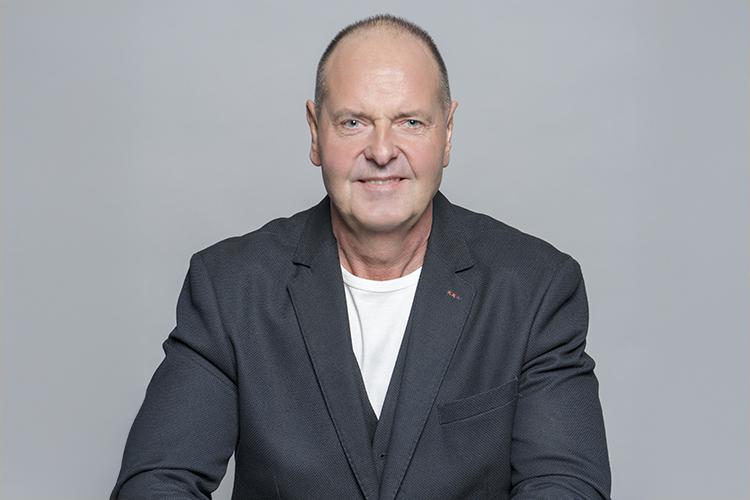
Director's address
2025 marked another milestone in the development of Reykjavík City's services and digital infrastructure.
After a period of building new infrastructure, services, and capabilities, last year's work — much like the year before — focused on making change last: shifting digital development out of focused initiative projects and into sustainable operations, backed by clear ownership, transparent prioritization, and measurable outcomes.
This reflects a simple but demanding vision. That digital is not an add-on to City services, but an integral part of them. Digital just is.
The emphasis is that digital transformation is not merely a technology project — at its core, it is a cultural and service transformation.
Serving people
During the year, the role of Reykjavík City's Digital Council was reinforced through changes to the council's approval process and a new framework for project selection. This gave the council a mandate to prioritize digital projects based on political priorities.
Projects were presented to the council with detailed information covering scope, cost, technical maturity, operational impact, legal requirements, and projected benefits. This was a significant administrative shift: projects were no longer prioritized primarily by their position in Fylkið (the portfolio backlog), but now also reflect political priorities.
The City's digital roadmap was one of the year's key topics of discussion. It draws on lessons from recent years, including the Bloomberg partnership, and charts the direction for next steps: These include more active product management, a new operating model, greater ownership of products by specialized departments, a clearer fee schedule, better management oversight, and regular benefit measurements.
The emphasis is that digital transformation is not merely a technology project — at its core, it is a cultural and service transformation. The City has already redesigned numerous service processes and moved a large share of applications and communications to My Pages. The work ahead is to ensure these solutions remain active, operational, accountable, measurable, and continuously developed.
At the center of that work, as always, is serving people.
A year of connections
Much of the year revolved around integrations between the Búar systems and My Pages, continued development of the Búar platforms, the Ráðgjafinn Platform, Unified Veita, digital payments on My Pages, electronic requisition books, and centralized grant management.
These projects vary in scale but share a common purpose: reducing duplication, shortening communication chains, improving traceability, and enabling residents to handle their affairs without needing to know the City's internal organizational structure. It is especially important that services previously built on paper, disparate systems, or manual data entry are moving to simpler and more secure processes.
The SkólaBúi system clearly illustrates where the City's digital journey is headed. The goal is not to digitize forms for their own sake, but to create a shared tool for everyone involved in a child's school support services. The project is driven by the need for better information flow, more secure handling of confidential data, clearer accountability, and greater oversight for both staff and guardians. By year's end, the system was in use across City-run primary schools, recreational activities, and centers, with next steps including bringing parents into the process.
In parallel, preparations began for a tender for a centralized learning management system for primary schools, where 38 separate contracts are to be replaced by better oversight, more secure contract management, and more efficient use of data.
When information is accurate, accessible, and tested with service users, technology can help people help themselves — and ease the burden on frontline services.
Data and artificial intelligence
Data and artificial intelligence were another defining theme of the year. Reykjavík City issued recommendations for the use of artificial intelligence grounded in professional standards, user-centered service, and efficiency. These recommendations emphasize transparency, safety, human accountability, and data protection — and make clear that artificial intelligence must never make decisions affecting residents' rights and obligations.
The year also marked the debut of a user-centered AI assistant on the web, which launched in December 2024 and handled 8,025 inquiries in 2025. At the same time, live chat conversations with staff dropped considerably.
This demonstrates that when service users receive fast and reliable answers, they are increasingly able to resolve their own inquiries without staff assistance. When information is accurate, accessible, and tested with service users, technology can help people help themselves — and ease the burden on frontline services.
Digital workforce
Responsible use of artificial intelligence also took shape in the third iteration of machine translation, the so-called digital workforce initiative, and ongoing conversations about the City's data. The translation project aims to use language models and machine-assisted translation to improve access for people whose native language is not Icelandic, reduce costs, and build a secure foundation of institutional knowledge.
The digital workforce initiative aims to automate repetitive tasks across all City departments; early projects show significant time savings, with the first six processes projected to free up around 10,000 work hours per year. By year's end, all of this was placed in a broader context. Artificial intelligence accomplishes little without quality data, clear presentation, defined accountability, and trust.
Trust was, in fact, one of the year's biggest challenges, as a major security breach struck a vendor that serves most municipalities in Iceland in some capacity. The City's data proved unaffected, but the incident underscored the importance of an active information security governance system, clearly defined response procedures, regular drills, and a so-called zero-trust approach.
Later in the year, a steering group on strengthening cybersecurity and data security was established to develop proposals for a comprehensive policy and action plan. In a world where public services rely increasingly on data and digital infrastructure, security is not a back-office support function — it is a prerequisite for public trust and dependable service delivery.
This served as an important reminder that digital access is a matter of rights, not merely convenience.
Digital access is a rights issue
Data protection, digital access, and digital human rights were prominent topics throughout the year. This served as an important reminder that digital access is a matter of rights, not merely convenience. Solutions designed without disabled people in mind can create new barriers, even when the goal is to make life simpler. The same holds true for electronic authentication, self-service, and artificial intelligence.
If the old way is closed off before the new way is genuinely accessible, people get left behind. That is why Reykjavík City has prioritized testing solutions with diverse service users and ensuring that digital support is available alongside digital requirements. A new focus on democracy was brought into the Department of Service and Innovation during the year, as the role of resident counselors and participatory democracy projects were transferred into the department.
Operational changes
Operational changes were another defining theme running through the year. Financial reviews of the Department of Service and Innovation for 2024 and the first six months of 2025 showed that IT operations were not sustainable, due in part to sharply increased cybersecurity and information security requirements.
The department's net expenditures significantly exceeded its budget in 2024, and that trend continued through the first half of 2025. This is, of course, no minor footnote in digital operations. It reminds us that new solutions must work not only on screen, but also within the budget, the operating model, procurement, product management, and the accountability of specialized departments.
Transparency about costs is part of the trust that is essential. To turn things around, the department undertook an intensive review of its operations, which resulted in the year's finances ending in balance. Reaching that result required changes to services and reductions in service levels in some cases, and it is clear that over the longer term, ways will need to be found to restore those service levels.
Residents should experience better access to information, more secure processes, and less unnecessary waiting.
A service commitment
Looking back over the year, it is clear that the Department of Service and Innovation handled an unusually broad range of matters. These spanned school support services, welfare, payments, grants, records management, open data, all manner of APIs, cybersecurity, artificial intelligence, translation, participatory democracy, waste collection, parking, building permits, internal services, financial systems, and collaboration with other municipalities and the national government.
What connects all of these is not technology itself, but a service commitment. Residents should experience better access to information, more secure processes, and less unnecessary waiting. Staff should have better tools, clearer accountability, and more time for meaningful work. The City should use data to learn, not to complicate.
No city without people
The year 2025 was, then, a year of accountability, prioritization, and service commitments. The task ahead is to stay that course. That means measuring outcomes, protecting rights, building reliable infrastructure, applying artificial intelligence thoughtfully, strengthening collaboration with the national government and other municipalities, and ensuring that no one is left behind as services change.
A digital city is not a city without people. It is a city that uses technology to understand people better, respond more quickly, make better use of resources, and build services that are simple, safe, and fair. This progress belongs to Reykjavík City's staff, partners, and residents. Progress like this does not come from a single department or team — it comes from the shared work of those willing to ask how the City can serve people better. That question remains our guiding principle.
