Particulate matter levels rise in the city
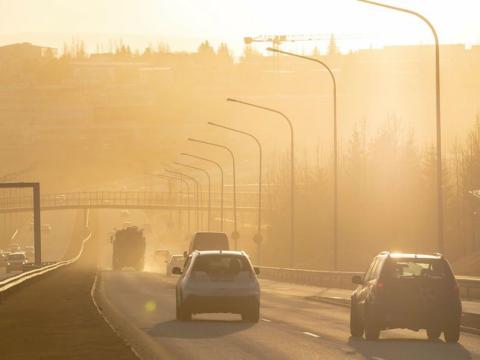
Suspended particulate levels (PM10) registered high at air quality monitoring stations across the city this morning. The dust originates from traffic, but with dry streets, readings are also high at stations away from major traffic routes. At noon, the PM10 reading was 171.4 micrograms per cubic meter at the monitoring station on Grensásvegur. By comparison, the 24-hour health standard is 50 micrograms per cubic meter.
Dust suppression tonight
Dust suppression is planned for tonight to reduce airborne dust. Dust suppression is a joint effort between Reykjavík City and the Icelandic Road and Coastal Administration. Similar weather conditions are expected over the weekend, but this measure is expected to reduce particulate pollution.
People with respiratory conditions, older adults and children should avoid extended outdoor activities and limit physical exertion. Officials advise the public to reduce private car use when possible by postponing non-essential trips, using public transportation more, carpooling or choosing other environmentally friendly transportation options. Companies are urged to encourage employees to work from home on days with high particulate levels when possible and reduce driving when feasible.
Reykjavík Public Health closely monitors the city's air quality and issues warnings and guidance when needed. The public can monitor suspended particulate levels and other pollutants at loftgæði.is. The site shows a map of monitoring stations in Reykjavík and elsewhere in the country.
Suspended particulates are the finest type of dust particles that easily enter the respiratory system. Health protection limits are set at 50 micrograms per cubic meter per 24-hour period for PM10 (suspended particles about 10 micrometers in size). The main sources of suspended particulates are road dust from worn asphalt, soot primarily from diesel combustion, soil particles, salt, ash, and other materials.