
No two days are the same in community outreach nursing

Arndís Vilhjálmsdóttir is one of two nurses who provide care for homeless people in Reykjavík. No two days are the same for the team that provides nursing care in emergency shelters, apartment complexes for people with addiction issues, housing first homes and anywhere else help is needed. Arndís also wrote an article that was selected as the 2023 research article of the year by the Journal of Forensic Nursing for her study on women's experiences in Icelandic prisons.
Nearly two years have passed since the first nurse was hired to provide community outreach nursing in Reykjavík, as Reykjavík City handles home nursing through a contract with Icelandic Health Insurance. Psychiatric nurse Arndís Vilhjálmsdóttir got the position and brings extensive experience working with homeless people and those with addiction issues. During her career, she has worked both at Landspítali Hospital's psychiatric ward and on prisoner mental health teams at both Hólmsheiði and Litla-Hraun prisons. Arndís was given the role of shaping the team's work. Later, nurse Anna Lilja Másdóttir joined the team with extensive clinical nursing experience, including work at Landspítali Hospital's emergency department.
No two days are the same
Arndís and Anna Lilja work under the SELMA team within home nursing and are based at Læknavaktin. Most of the time, though, they're traveling around the city, with their main stops being emergency shelters plus apartment complexes and individual homes run by Reykjavík City's welfare department, where people who are actively using substances live. They also provide advice to staff and work closely with Reykjavík City's VoR teams. They also focus heavily on connecting different professionals who work in this area.
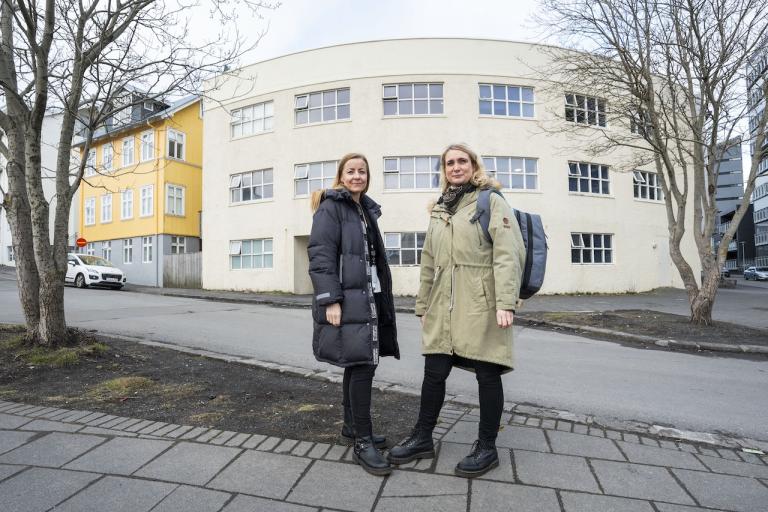
The group they serve often has both social and health-related problems, so their tasks vary widely. Arndís and Anna Lilja provide nursing care, monitor disease symptoms and follow up on medication treatments, offer various forms of support, and serve as advocates for the group within health and social services. They work to make sure that individuals in the group receive necessary services, even while using substances.
Much has changed in recent years
Arndís says knowledge, understanding and interest in the circumstances of people with addiction issues have grown in recent years, both within systems and generally in society. "I started working in the addiction psychiatry ward in 2007. In the years after that, harm reduction started gaining ground, but at that time very few people knew the term," she says. Gradually, services for the group have improved and cooperation between systems has increased. Important steps are being taken in the right direction. However, services still need to be expanded and made more continuous. This applies, for example, to health services for people who are getting older. "This group ages like everyone else and needs both social support and health services. We serve, for example, individuals who have developed memory problems and need considerable care. There's a shortage of nursing wards or more specialized housing for that group," she says.
Conducted research on women's experiences of recovery in prisons
Last year, an article by Arndís was selected as the research article of the year in the Journal of Forensic Nursing. The article was based on her master's thesis from interdisciplinary graduate studies in health sciences at the University of Akureyri, where she researched women's experiences in Icelandic prisons and their experiences with treatment options inside and outside prison. "I felt the women who participated in the study received me very well and were willing to share a lot with me," says Arndís. The same themes came up again and again in the conversations. The women spoke about idleness that they felt worsened their dysphoria and addiction to substances. Generally, they did not see their prison stay as rehabilitative and felt it had harmful effects on their physical health and mental well-being.
Arndís says awareness has grown in recent years and that even more people now realize how large a role trauma plays in the lives of most people who struggle with addiction. "Prison is not an ideal place to provide trauma treatment. Here in Iceland, women are housed in the high-security prison at Hólmsheiði, with the accompanying restrictions on freedom, security searches, locked doors and strict security monitoring. Women are typically incarcerated for drug-related offenses and rarely need this type of high-security environment. Women's prisons should be warmer and more open, with a homelike feel." A 2023 report from the Parliamentary Ombudsman reached the same conclusion.
She says the difference between men and women is often that women are older when they begin serving their sentences. They have more extensive trauma histories and are more likely to struggle with mental health issues than male inmates. "It's essential that everyone who works with women in this situation understands this and approaches them with that awareness."
