
Major changes in the organization of services for disabled people
Reykjavík City has undertaken major changes in how it manages services for disabled people. The goals for these changes are ambitious: To improve service quality for disabled people, clarify the division of responsibilities, increase oversight and supervision, simplify procedures, ensure equitable service, secure sustainable operations, reduce delays, streamline decision-making, and boost efficiency in service delivery through more effective use of financial and human resources.
Changes to the organizational structure for disability services were part of the recommendations from an analysis by HLH ráðgjöf, conducted at the request of the former mayor between February and December 2024. The analysis report included 67 recommendations covering various aspects of operations, including procedures, organization, operational models, policymaking, and more.
The recommendations were presented at a City Executive Council meeting on July 22, where the council assigned further work on them to either the Welfare Council, the Department of Finance & Risk Management, or the Department of Welfare.
The complete report can be viewed in the City Executive Council's public records.
Emphasis placed on collaborative change
With the changes, service operations for disabled people moved from the City's local centers to a central office. The central office now has five division heads now work there, managing residential services, counseling, and support services in addition to the head of office who handles finances, operations, administration, and development projects. Counseling for disabled people continues to take place at the centers as before.
"These are changes designed to advance services, and disabled people should primarily notice more efficient and robust service."
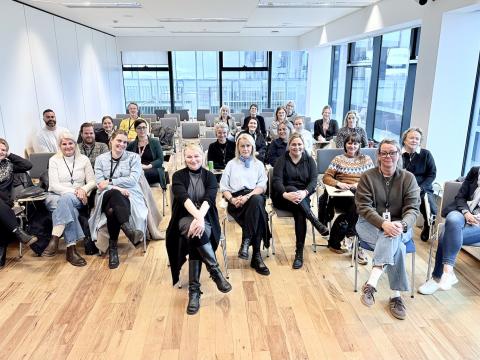
During the change process, emphasis has been placed on close collaboration with those who work within this service area at Reykjavík City, such as directors of group homes and apartment complexes for disabled adults, managers, counselors, and other staff in the service area. Among other initiatives, the city has held large workshops and conducted a SWOT analysis to identify the strengths, weaknesses, threats, and opportunities of the changes. The organizational changes took effect Feb. 1, and Rannveig Einarsdóttir, Director of Welfare, believes they have been successful. "These are changes designed to advance services, and disabled people should primarily notice more efficient and robust service. It has been interesting to see the staff's enthusiasm and positivity; everyone has really pulled together to make this a success. That has been key to why this transformation has been so successful. What we see now after this seven-month process is that we are on track to achieve the goals we set. We have increased oversight, clarified the division of responsibilities, and created simpler decision-making processes."
Strengthening data-driven decision-making in partnership with Bloomberg and Harvard
At the City Executive Council meeting, officials also introduced a project that Reykjavík City was invited to participate in through Bloomberg-Harvard in the United States, focusing on strengthening data-driven decision-making within the City. The council decided to examine the residential service operations for disabled people at Reykjavík City. Six apartment complexes, all of which had exceeded their budget by 5% or more last year, were selected to participate. The project was formally launched on May 5 with key participants and will conclude at the end of 2025.
The goal is for half of the apartment complexes to be within budget by the end of 2025 and all six by the end of 2026. The goal is also to reduce sick leave rates by 1.5% per apartment complex, ensure at least 30% of staff have college degrees, and that 50% of staff and 100% of directors complete required training courses.
"We strive to achieve positive changes, both in our operations and, just as importantly, in the well-being of our staff."
To achieve these goals, directors of the apartment complexes receive targeted assistance. Regular meetings are held with them, and a strong emphasis is placed on maintaining service quality. Rannveig says the work is very promising. "With extensive guidance and support from a Bloomberg-Harvard specialist, we have successfully implemented these procedures. We strive to achieve positive changes, both in our operations and, just as importantly, in the well-being of our staff, which results in even better service. It's too early to confirm definitive results, as the project concludes at the end of 2025. We have no doubt we will achieve success and are already drafting plans to implement similar procedures in other services within the Department of Welfare. The project focuses on using data to achieve changes in the department's services. This is a learning process we'll use to improve other aspects of our services."
