
Let grass grow and bloom
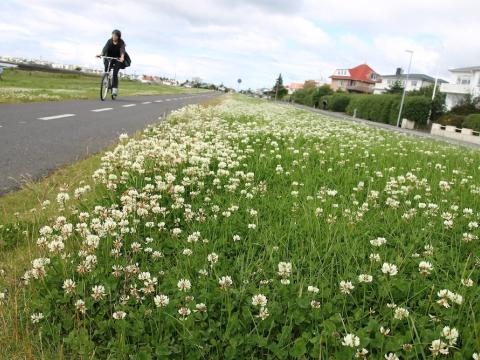
Reykjavík City will reduce mowing in certain areas this summer to allow natural grass growth and flowering. The goal is to boost biodiversity and improve long-term ecological sustainability.
Mowing will continue along residential boundaries, paths and streets. Ornamental gardens and high-use neighborhood areas will also be well maintained.
Intentionally wild zones
The chosen areas are being intentionally left to grow more naturally. Many of these zones are marginal areas along major roads. These spaces currently often support little life but have the potential to become habitats for birds and other wildlife.
The project also aims to connect and expand existing natural-looking green spaces. Signs will be posted to explain that these are “intentionally wild” areas.
These areas along traffic routes often have limited biota but offer great opportunities to promote biodiversity and make them more sustainable. Different methods will be used, from simply halting mowing to planting trees, bulbs, or perennial species to support the transition.
Alternative maintenance
Grassy areas with trees already planted are especially suitable for wild growth, as mowing can damage young trees. These areas can also be enhanced by planting additional trees and shrubs—supporting urban reforestation.
In other areas there is poor grass coverage or erosion (especially on slopes). The city may sow seed mixes or plant perennials such as white clover and red fescue in these areas.
“Intentionally wild” doesn’t mean neglected—these areas will still be maintained, but with different methods. Many areas will be mowed at least once annually, typically in late summer, to avoid withered grass. In 2025, areas such as Rafstöðvarvegur and Sævarhöfði—along with other locations across the city—will be mowed once instead of the usual three times.
By the numbers
- Total mowed area in summer 2025: 456.9 hectares
- Number of mowing zones: 10,842.
- 76% are on city land
- 24% are along urban highways
Mowing maps are updated regularly as paths and infrastructure change.
A proven approach
These practices are widely used in countries like Sweden and Denmark, where the nationwide “Vild med vilje” project promotes intentional wild growth. In Iceland, similar efforts have been made in places such as Múlaþing. The UK has also embraced this approach—focusing on blooming wildflowers instead of mowing, particularly along roadsides and traffic medians.
The goal is to support local ecosystems and create more beautiful public spaces—while also saving resources by reducing unnecessary mowing.
