
Help protect Tjörnin's ducklings - stop feeding bread
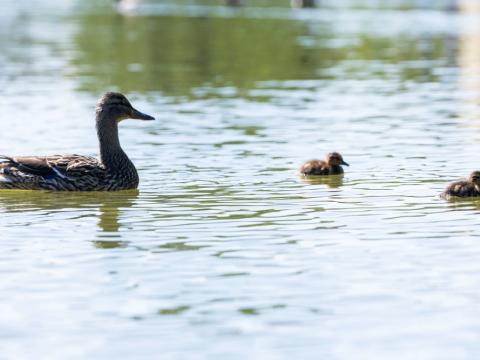
Breeding season at Tjörnin has reached its peak and the first young birds are hatching. We can expect a good number of young birds this summer if breeding goes well.
Many duck pairs are now at Tjörnin, especially mallards and tufted ducks along with several other species. Now that breeding season has begun, the ducklings swim with their mothers on Tjörnin, and it's important to stop feeding bread because bread attracts gulls that also prey on young ducklings. Ducks have plenty of food at Tjörnin during the summer for themselves and their young, so there's no need to feed them.
The survival of ducklings at Tjörnin depends mainly on how good the food supply is and whether predation by gulls (lesser black-backed gulls) is extensive. Gulls come to Tjörnin primarily to bathe, rest and eat bread, but some individual gulls specialize in preying on young birds. It's likely that if bread feeding stops, the number of gulls would decrease. Therefore, we recommend stopping bread feeding at Tjörnin during breeding season.
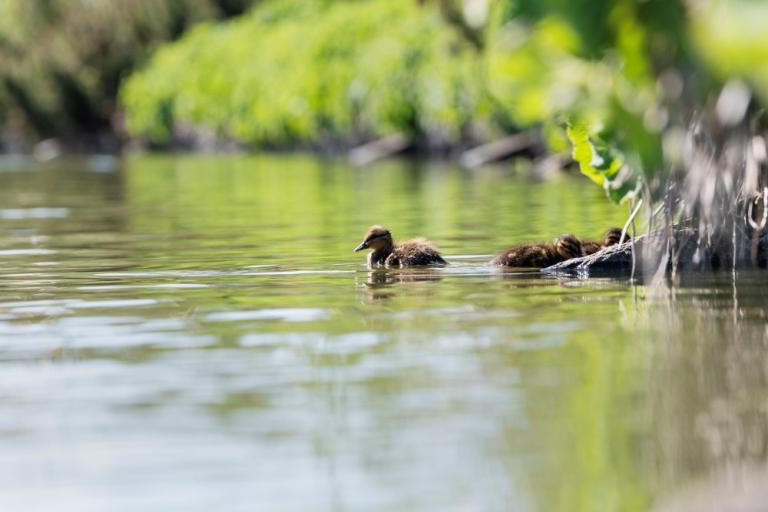
Another consequence of bread feeding is that nutrient levels in Tjörnin increase significantly, both from the bread itself but mainly from the large number of birds that come for the bread. Too many nutrients can cause harmful algae blooms in the water, when blue-green algae multiply excessively and the water becomes very murky. In the worst cases, a thick scum can form on the water's surface with possible toxic effects. These algae blooms are harmful to the ecosystem, and vegetation and small aquatic animals struggle under these conditions. This can affect the food supply of birds that frequent Tjörnin, including ducklings. Bread feeding can therefore harm ducklings in two ways.
We recommend stopping all bread feeding from mid-May well into fall. There's adequate food for ducks and other birds during summer and into fall. When it starts getting cold, it's good to start feeding the ducks again, but even then you should avoid bread and choose other foods instead - grain, seeds, oats, leftover salad leaves and cooked rice, which is healthier for the ducks and the ecosystem.
