
Children on Klettaskóli waitlist offered alternative specialized education
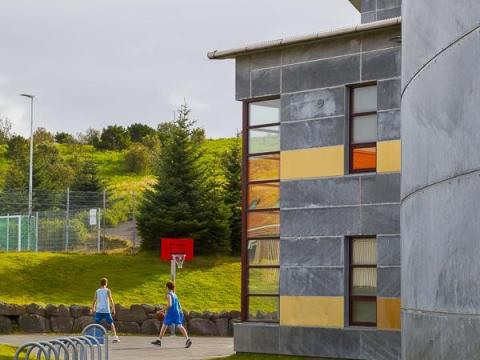
Up to eight Reykjavík children who meet admission requirements but cannot get into Klettaskóli this fall will be guaranteed placement at Húsaskóli.
Klettaskóli can only accept 14 students for the 2025-2026 school year, but the school received 53 applications and 41 children met the requirements for admission. This matches the trend of recent years where demand for placement at Klettaskóli has far exceeded the school's capacity.
To address this situation, Reykjavík City has decided to offer up to eight students with legal residence in Reykjavík who cannot get into Klettaskóli placement at Húsaskóli. Several children have also been offered placement at Arnarskóli and in special education classes where their needs will be met.
Inclusion one of main goals
In the unit at Húsaskóli, children will have access to specialized education, instruction and recreational activities in collaboration with the Kastali after-school program. Klettaskóli will provide consultation and support to Húsaskóli and Kastali to ensure quality services. Inclusion will be one of the main goals of the project, which aims to build a bridge between people with and without disabilities. A head of division position has been advertised to manage the unit, which will be part of general school operations but with excellent facilities to provide people with disabilities training and instruction according to their support needs.
Steinn Jóhannsson, Director of Education & Youth, has held discussions with education directors from neighboring municipalities about solutions similar to what Reykjavík plans to do for Reykjavík students. "We have worked systematically to find solutions to meet the support needs of children with disabilities, and this approach is an important part of that," says Steinn.
Assessment of new special education school development underway
An assessment by the Association of Municipalities in the Capital Area on future development of special education schools in the region is underway. The goal is for the assessment results to be available this fall and for preparations to establish a new special education school to begin as soon as possible. It's clear that the need for specialized measures will increase in the coming years and decades, and it's important that infrastructure development takes this into account.
Training and instruction according to support needs
Many applications were received for the 17 openings available in special education classes for children with autism — 47 total — and of those, 45 meet the requirements for enrollment. Among those who don't get an opening in a special education class are certainly students with complex support needs, and the Department of Education & Youth along with school support services in the neighborhoods will prepare to receive these students and provide their education at their home schools or where parents prefer. Efforts will be made to provide good facilities and to give them training and instruction according to their support needs.
