
Important feedback on climate projects
A collaborative climate action project involving seven European cities is entering its final phase and will formally end in 2024, prompting a workshop in mid-December to provide critical feedback. The project is called SPARCS, which stands for Sustainable energy-Positive and zero-cARbon CommunitieS. All participating cities are working to become sustainable, environmentally friendly and carbon-neutral communities.
The City of Reykjavík joined the project in 2019, along with Reykjavík Energy as a technical partner. Fully funded by the EU under the Horizon 2020 framework program, the research project focuses on a range of solutions to achieve carbon neutrality. The seven European cities are Leipzig, Espoo, Kladno, Maia, Kifissia, Lviv and Reykjavík.
Photos from the workshop


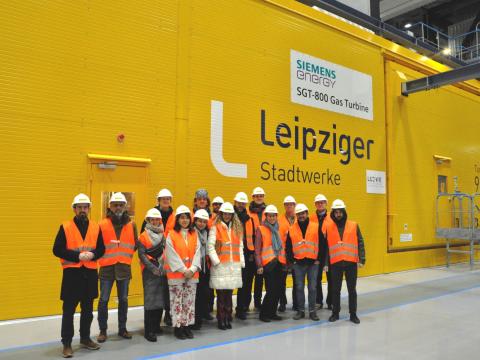
The workshop took place in Leipzig Dec. 12-14, 2023, where the project management team and independent advisors provided project managers with crucial feedback. Two pilot projects in Reykjavík were presented at the meeting. One was Green Housing for the Future, and the other involved research on active transportation in connection with the changes underway at Hlemmur. These two projects were chosen for review because transportation and construction account for the largest share of greenhouse gas emissions in Reykjavík. The projects drive innovation by creating incentives to advance the energy transition, accounting for the full life cycle of buildings in new developments, and shifting car-centered transit priorities and travel habits toward green transportation.
The project presentations received positive feedback from EU representatives, including those from Scalable Cities and 100 Climate Neutral and Smart Cities, an initiative in which the City of Reykjavík participates. During panel discussions, Sylva Lam, SPARCS project manager and project manager for international climate projects at the Office of the Mayor and Chief Executive Officer, emphasized the importance of flexibility in innovative solutions. The policy must be able to scale both up and down. “Flexibility and adaptability are essential for new measures to succeed and for those actions to be repeated under different circumstances,” Silva says.
