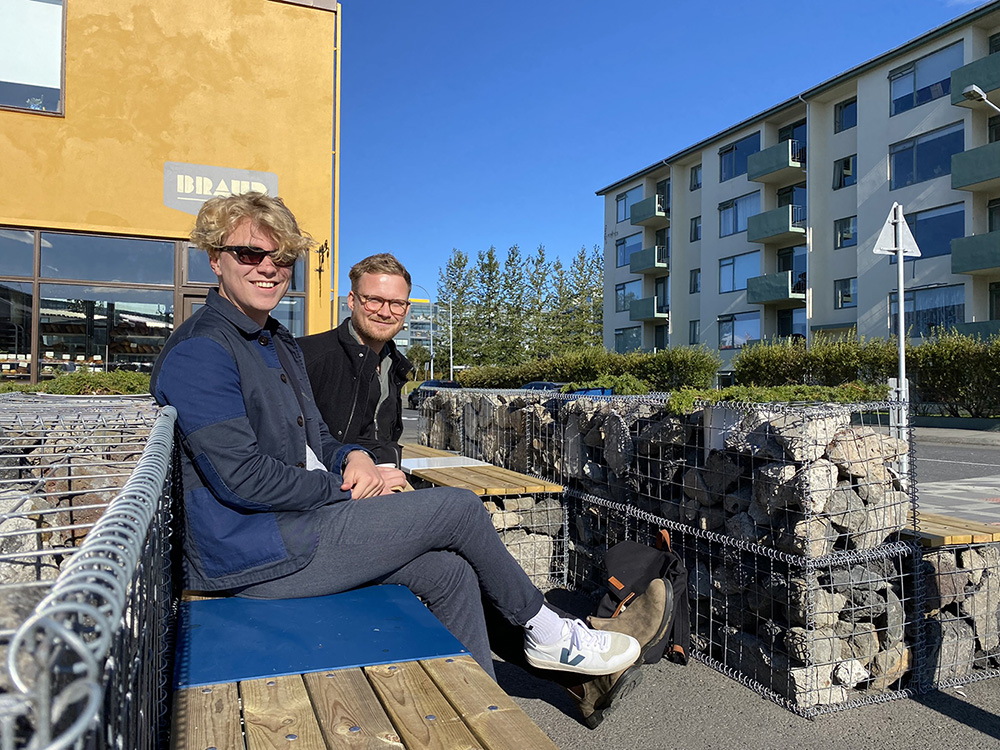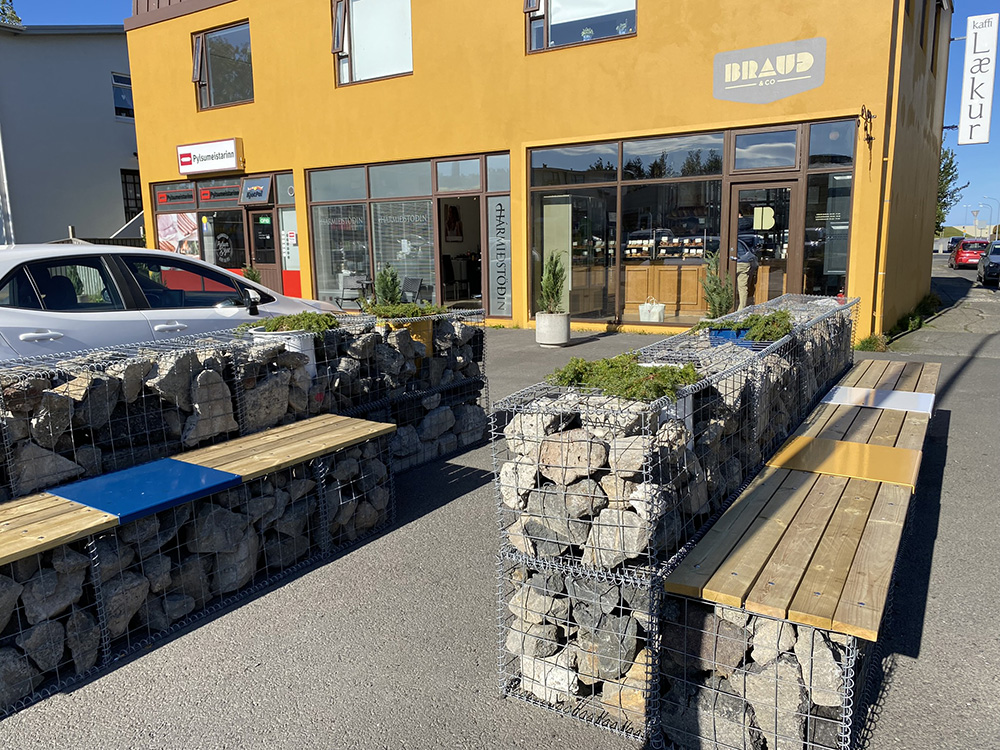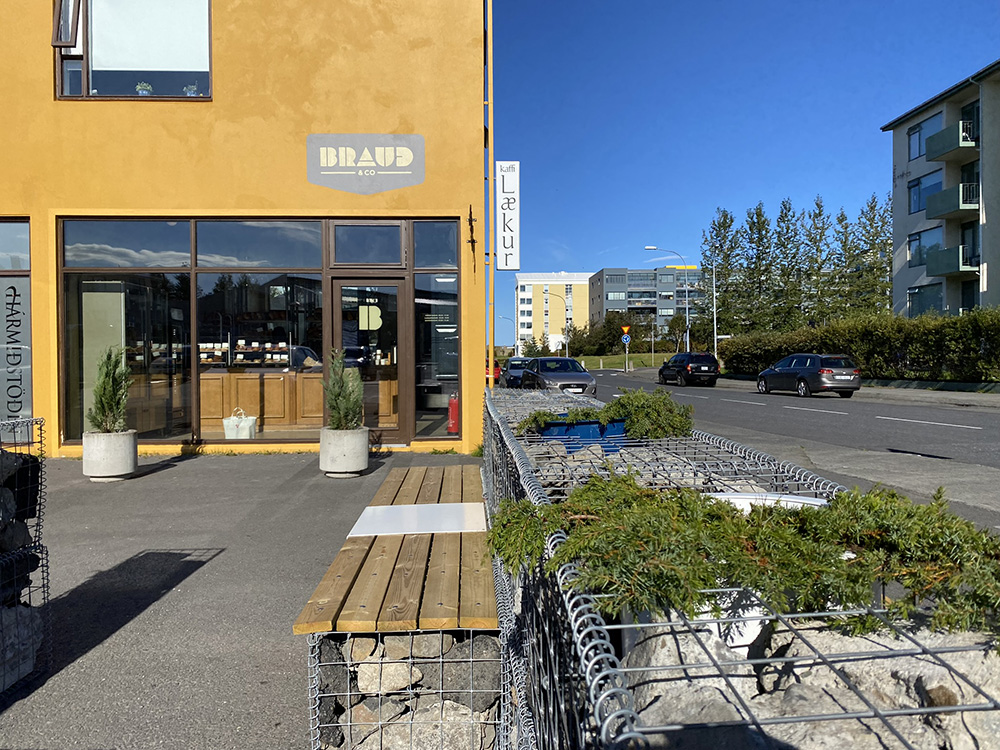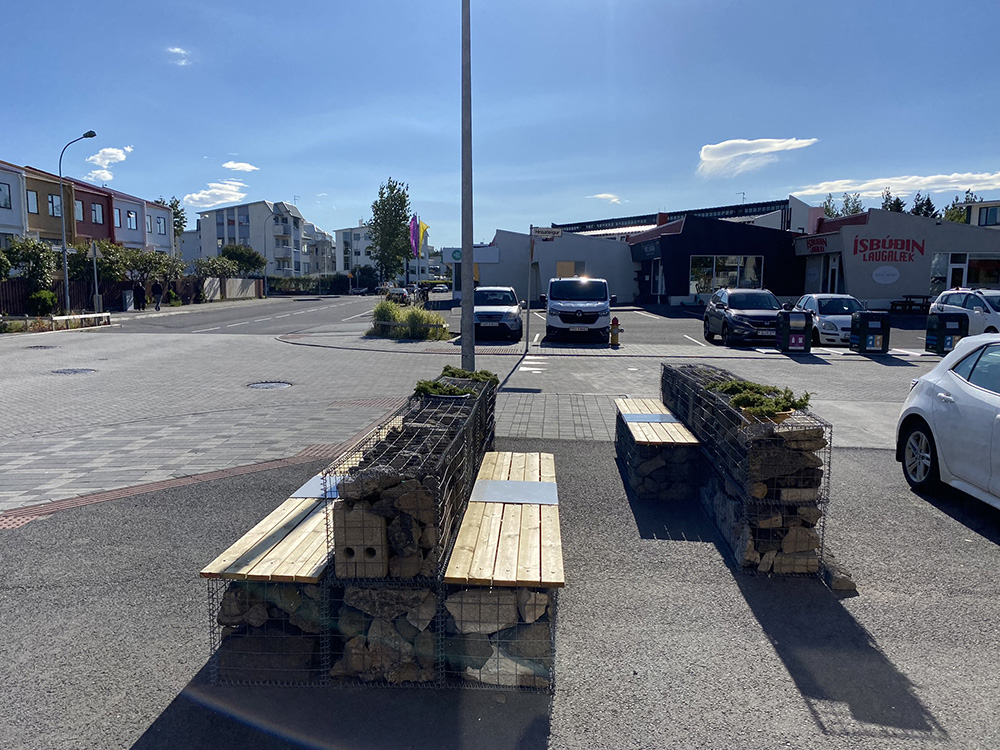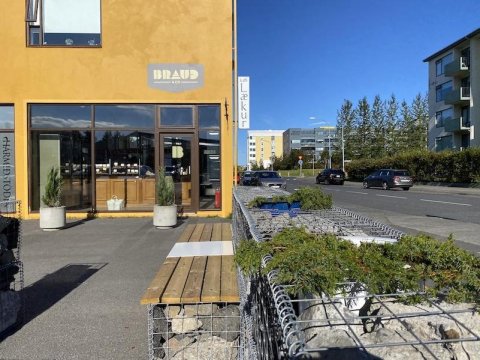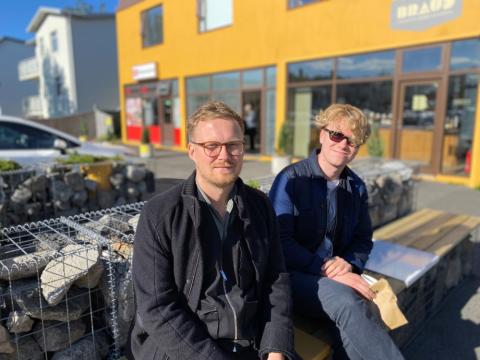
Architecture students Gísli Hrafn Magnússon and Sigurbergur Hákonarson designed an enjoyable outdoor area at the intersection of Laugalækur and Hrísateigur. This is part of the Standby Squares project, which aims to create more enjoyable areas, celebrate the unexpected, and serve as a platform for experimenting with the urban environment.
"We're classmates in our final year of architecture at the Iceland University of the Arts. We had worked on school projects together before and wanted to do something bigger together," says Sigurbergur. They also saw participating in the project as a good opportunity to get suitable summer work.
They both have connections to the Laugardalur neighborhood and thought it would be fun to support it with this project. They also emphasized the connection by making this public space a tribute to architects Gísli Halldórsson and Sigvaldi Thordarson, who built their first houses side by side on Efstasund. Gísli and Sigvaldi studied at the academy in Copenhagen at the same time and also opened the first architectural firm together. Their relationship and collaboration had a major impact on Laugardalur.
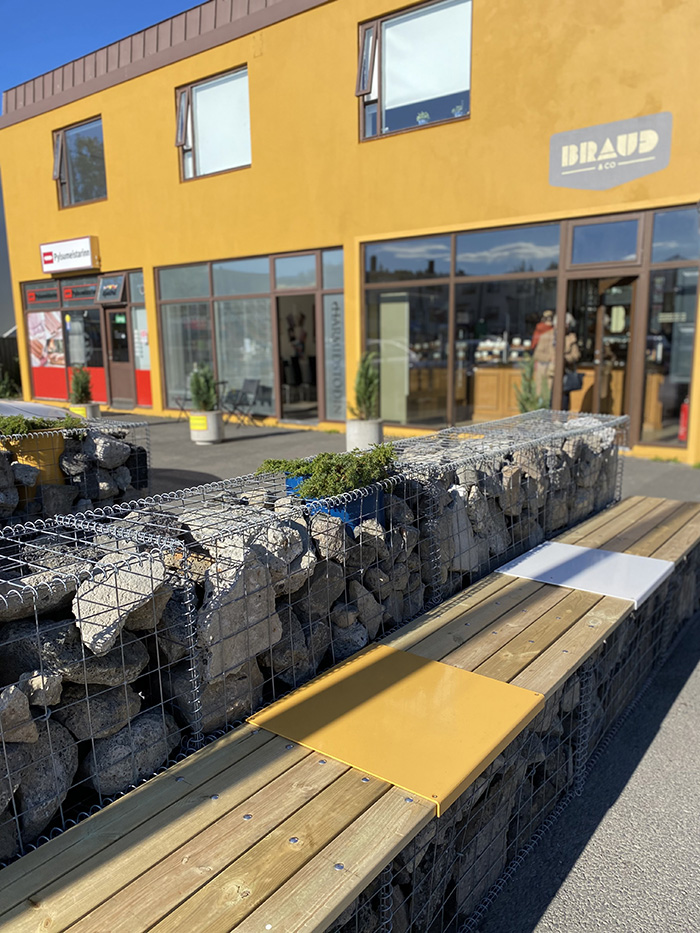
Gísli Hrafn says he and Sigurbergur took a class at school with Pétur Ármannsson, who brought up these historical connections that found their way into the project. The course covered Sigvaldi and Gísli's influence on the neighborhood. This is reflected in the work primarily through color choices, with yellow, blue and white woven into the seating area.
Focus on climate change issues
This year's Standby Squares focus was on climate change issues and how to increase carbon storage and promote biodiversity in urban spaces to create ideal conditions for people, birds and plants to thrive.
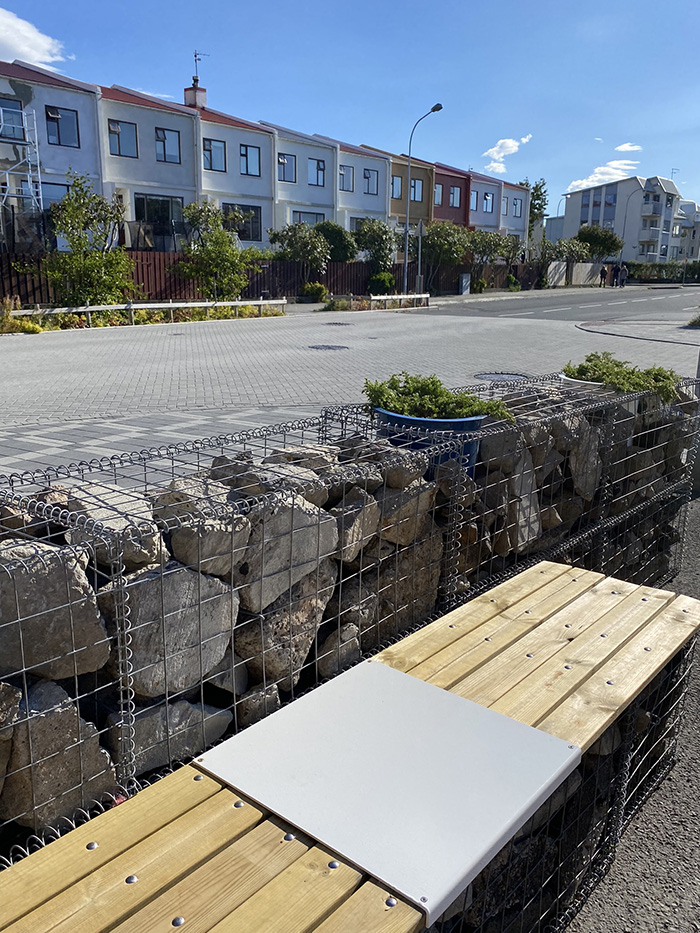
Related to the theme, they came up with the idea of using construction waste for the seating. The seating area is built from wire frames filled with construction waste, concrete debris from a development site at Kirkjusandur, and stone chips from Laugalækur.
"We saw there was quite a lot of material there that was perfectly usable for this and could also be useful for something else. The materials have been imported to Iceland, this concrete has been poured, installed, and then dismantled," says Sigurbergur.
"Usually this material gets transported elsewhere, like to landfills," says Gísli Hrafn, questioning that practice.
Public space for everyone
The result is an enjoyable outdoor area, a public space where people can sit down and spend time. Plenty of services can be found at this intersection, and everyone can use this new public space.
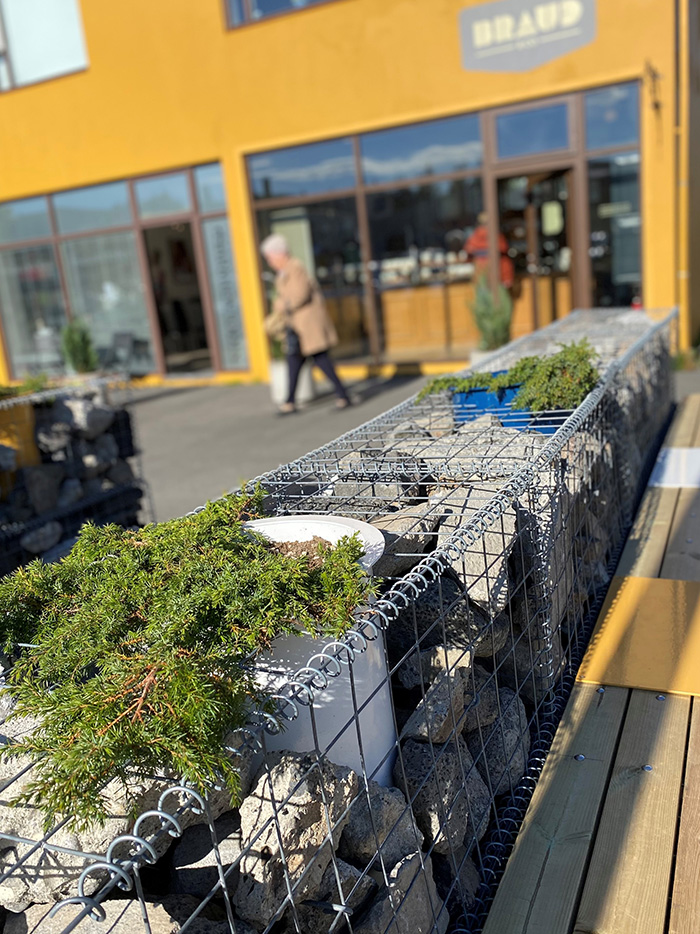
The wire mesh units create an enjoyable space and provide shelter from cars while serving as benches. The units were exactly the right height to work as seating areas. They also point out that it's possible to lock bikes to the mesh.
There are truly ideal conditions for people to spend time, and as for plants and birds, inside the units you can find both a bird bath and pots with juniper, which is an evergreen plant that will spread better over time.
"This project [Standby Squares] is primarily about exploring certain areas and examining how much public life exists there. You won't know what works until you actually try something. That's why it's important to keep testing small projects that can grow into something permanent," Sigurbergur says.
Photo gallery from Laugalækur