
From vision to reality
Department of Service and Innovation Annual Report 2025
Varða quality management system
The Department of Service and Innovation's guiding principle is to stay one step ahead, put people first, and never stop taking bold steps forward. That approach has shaped the implementation of Varða, a new quality management system that has already made a broad impact across Reykjavík City.
We sat down with Drífa Guðjónsdóttir Plank, the solution owner, to discuss the project, the journey, and the lessons learned along the way.
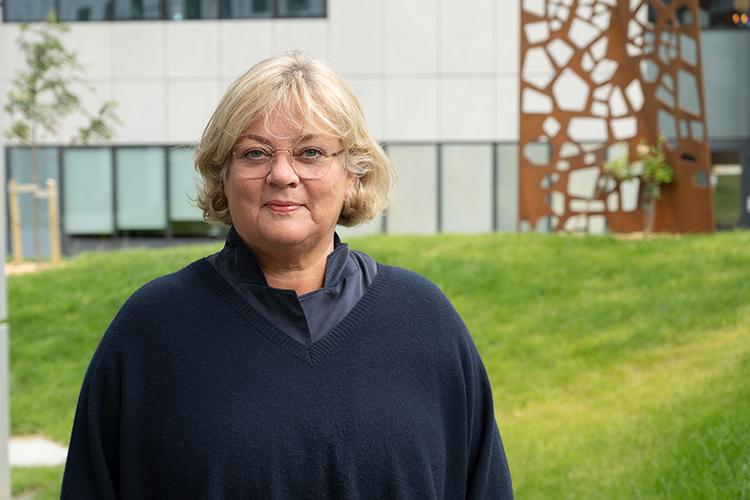
We needed a more focused, user-friendly system genuinely designed to support quality work across the board.
Can you tell us what drove the need for a new quality management solution?
The Department of Service and Innovation's quality manual was progressing well, but by 2024, I became convinced we needed a better solution for managing our quality documents. We needed a more focused, user-friendly system genuinely designed to support quality work across the board.
We had previously tried several different solutions. We had Atlassian Confluence and started building a quality manual there, but the platform had limitations and lacked the comprehensive quality management features we sought.
How did you select a solution?
Around that time, Reykjavík City's infrastructure was bolstered by the Microsoft 365 rollout, opening new possibilities for using SharePoint as a quality management platform. We conducted a preliminary study to examine our needs closely and look at what other organizations were doing.
The option to build a quality system on SharePoint made the decision easy; a solution leveraging existing infrastructure is simply the cost-effective choice. We ultimately selected a solution from Spektra, adapted it to our needs, and named the product Varða.
We have heavily emphasized standardizing quality practices citywide, from templates to workflows...
What is Varða?
Varða is a quality management system built on SharePoint, placing it in a familiar working environment for staff. The system allows users to create and edit various quality documents, standardize templates, manage version control, and track document history.
It supports the entire process, from drafting and reviewing documents through approvals and training. The system also sends automatic reminders to responsible parties, ensuring documents are regularly reviewed and updated to reflect current practices. Such ongoing review is vital in any quality management system.
How did the implementation go?
Varða launched in early 2025, and implementation has gone very smoothly. After the Department of Service and Innovation completed its Varða implementation, the system was quickly rolled out at the Department of Environment and Planning. Since then, product manager Lena Dögg Dagbjartsdóttir, I as solution owner, and a working group of quality specialists I coordinate have led the setup and implementation of the Varða quality management system across other departments.
That collaboration has been invaluable and essential to our progress. We have heavily emphasized standardizing quality practices citywide, from templates to workflows, and Lena Dögg and I are on hand to support each implementation with guidance and assistance. Beyond that, we learn from one another across the city.
The system empowers staff to take a more active role in quality work — for instance, by reviewing documents, suggesting improvements, and following up on processes.
What challenges have arisen?
The main challenge is likely that the implementation is, to some extent, a focused initiative project added to people's existing workloads. Getting it up and running takes time and focus.
The goal, however, is for this to become a natural part of everyday work, with greater quality awareness and more purposeful practices naturally following.
What impact has Varða had?
The impact is already starting to show. The system empowers staff to take a more active role in quality work — for instance, by reviewing documents, suggesting improvements, and following up on processes.
We are genuinely empowering staff, giving them the tools to shape their own working environment. That is what quality management should be: a living, participatory effort for continuous improvement.
It's especially rewarding to see the value it brings to staff — to see people feel they have a tool that genuinely helps them in their daily work.
How did the project expand beyond the Department of Service and Innovation?
In fall 2025, an agreement was reached allowing all Reykjavík City departments to participate. That was followed by a rollout campaign, and implementation is now underway across nearly all city departments, central administration, and Internal Audit.
This speaks to how crucial it is to coordinate quality management citywide. A shared system gives us better oversight, simplifies our work, and strengthens professional quality practices citywide.
What has been the most rewarding part of the project?
Seeing things come together and actually work in practice has been incredibly satisfying. It's especially rewarding to see the value it brings to staff — to see people feel they have a tool that genuinely helps them in their daily work. Hopefully, all staff will soon be familiar with varda.reykjavik.is.
Working with people across departments has also been an incredibly enriching learning experience. No two workdays are the same; the collaboration has been both rewarding and genuinely enjoyable.
What's next?
The work ahead centers on continuing the implementation and development of Varða. The goal is to bring all of the City's quality documents into the system and use it more effectively.
I'm confident that as we do so, quality awareness will continue to grow, and improvement efforts will become more visible and impactful than ever.
