
From vision to reality
Department of Service and Innovation Annual Report 2025
Information and Records Management
Roles and responsibilities
The Office of Information and Records Management is responsible for the professional, legally compliant, and consistent management of information and records across Reykjavík City. The office's role spans both central administration and direct collaboration with the City's departments and organizational units, with the aim of ensuring traceability, transparency, and secure handling of information from the point of receipt through long-term preservation.
In recent years, the focus has shifted away from implementing individual document systems toward a more comprehensive approach to information management — one that prioritizes standardized procedures, digital preservation, and deliberate governance of information regardless of medium or system.
In doing so, the office supports sound administration, regulatory compliance, and Reykjavík City's ongoing digital transformation.
2025 at a glance
- Continued Hlaðan implementation at primary schools and recreational activity programs
- Approval of key governance documents, document retention schedules, and classification keys
- Audit review by the National Archives of Iceland — Reykjavík City rated at maturity level 3 out of 4
- Launch of projects focused on digital communication and long-term preservation of visual materials
- Strengthened oversight of information management in M365 and the City's data landscape
- Rollout of document security labeling in the M365 environment
The year's priorities focused on strengthening information management, improving regulatory compliance, and standardizing procedures across the City, while reinforcing the connection between records management, digital development, and information governance.
From records management to comprehensive information management
Throughout the year, Reykjavík City made steady progress in evolving its records management into a comprehensive information management approach — one that covers the full information lifecycle, from receipt and processing through to preservation and transfer.
Key priorities included:
- Harmonizing rules, procedures, and responsibilities
- Continuing the rollout of Hlaðan
- Improving oversight of information held outside traditional records systems
- Strengthening digital preservation and information management
This work supports the City's goals of greater transparency, improved traceability, and more efficient administration.
Harmonized procedures and improved oversight
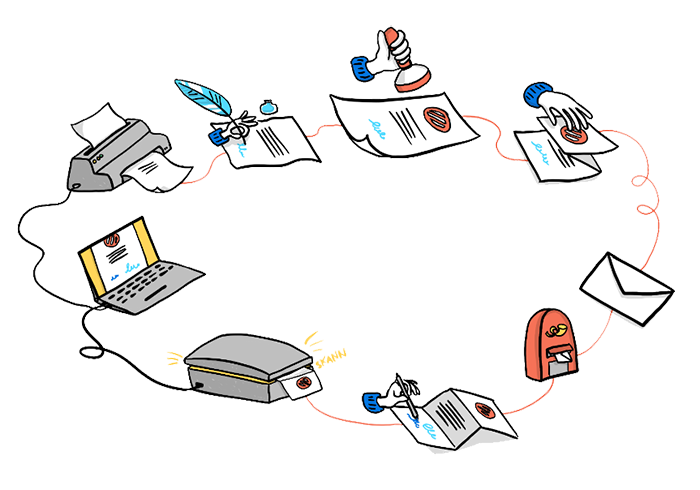
Significant effort went into building a full picture of Reykjavík City's records landscape and aligning procedures across all City operations.
The main goals for the year were:
- Improving oversight of the City's records and datasets
- Strengthening Hlaðan as the City's shared case registration and document archiving system
- Deepening the connection between records management and other systems and digital processes
- Beginning the systematic processing of both physical and digital datasets
Particular attention was given to better integrating information management with other information systems and digital initiatives across the City.

Hlaðan — continued rollout
Work continued on rolling out Hlaðan as Reykjavík City's shared information management and document archiving system.
The rollout continued at primary schools and in recreational activities, with a focus on reinforcing Hlaðan's role as the City's shared case register.
The project supports:
- Consistent registration
- Improved traceability
- Better information flow
- Aligned procedures across operational units

Governance documents and procedural alignment
During the year, key records management governance documents were finalized and approved, including archiving plans and case classification keys for Hlaðan.
This work has established a clearer framework for accountability, registration, and the handling of information — strengthening professional practice and regulatory compliance.

Digital communication and preservation of visual content
Work began on digital communication and the long-term preservation of visual content through a redesign of Reykjavík City's digital asset management (DAM) solution.
The project aims to strengthen the management, communication, and preservation of digital visual content and establish a clearer framework for its future use.

National Archives of Iceland supervisory review
The National Archives of Iceland conducted a supervisory review during the year, in which Reykjavík City scored at maturity level 3 out of 4 — corresponding to professional records governance and management.
The results confirmed that robust processes and procedures are in place, while also identifying opportunities for continued improvement.
Results and benefits
The continued development of information management produced visible results this year, including better regulatory compliance, greater consistency, and increased awareness of the value of sound information management practices.
This year's projects led to, among other things:
- Clearer processes and accountability
- Greater consistency in procedures
- Improved oversight of records
- Enhanced traceability and transparency
- Stronger centralized registration in Hlaðan
Staff and departments also developed a stronger understanding of why records management matters for administration, information requests, and data preservation.
The year also marked the start of document security labeling in the Microsoft 365 environment — a step that supports safer information handling and lays the groundwork for ongoing development on AI solutions and data protection.
Collaboration and services for departments
Collaboration with the City's departments and operational units continued to be a central part of the work.
Key priorities included:
- Continuing the rollout of Hlaðan
- Standardizing procedures for data storage and disposition
- Consultation on information management and data governance
- Education and day-to-day support for staff
Education and consultation proved essential to introducing new workflows and building consistent working practices across the organization.
Key challenges
Despite strong progress, challenges arose that reflect the diversity of City operations and the complexity of its information environment.
The main challenges involved:
- Uneven records management maturity across departments
- A fragmented systems environment and legacy datasets
- Large-scale physical paper collections
- A persistent need for change management and staff education
The year's experience confirmed that success cannot rest on rules and systems alone — it requires active collaboration, clear accountability, and a commitment to continuous improvement.
2026 priorities
The main priorities for the coming year will be:
- Continuing the Hlaðan rollout to additional operational units
- Digital communication and long-term preservation of information
- Preparing electronic transfers to the National Archives of Iceland
- Processing and packaging physical paper collections
- Standardizing processes and document preservation practices
- Following up on recommendations from the National Archives of Iceland
- Continuing to advance the records management maturity level
Looking ahead
In the years ahead, the focus will remain on strengthening information and records management as a foundation for sound administration and effective digital services.
Key development initiatives for the years ahead include:
- Expanding Hlaðan to additional organizational units
- Electronic submission of datasets and custody releases
- Processing and transfer of paper archives
- Reassessing and charting the future direction of document archiving systems
- Expanding the use of information to strengthen services and support knowledge sharing
The goal is to ensure that Reykjavík City continues to build exemplary information management practices that support transparent, efficient, and trustworthy administration for years to come.
