
The sorting system
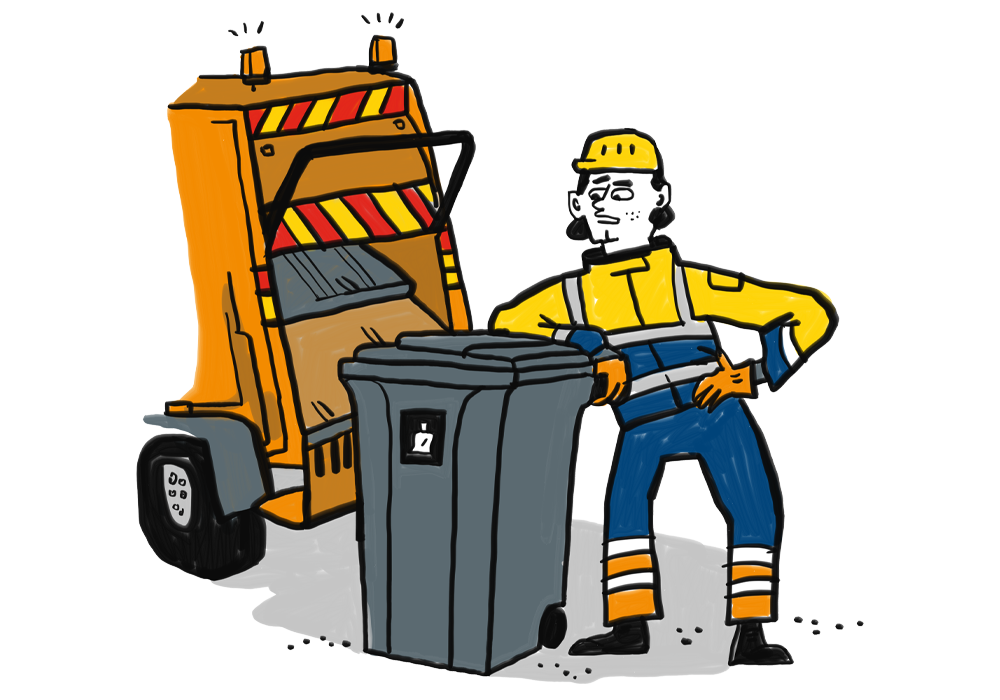
The Act on the Circular Economy requires household waste to be sorted into four categories at home. Proper sorting can reduce waste and recycle value instead of disposing of it.
Did you find a note on your bin?
When we're unable to empty your bin for any reason, we leave a sticker on it explaining why. This could be due to access issues or problems with the bin that need to be addressed quickly to ensure it can be emptied in the future.
Four categories
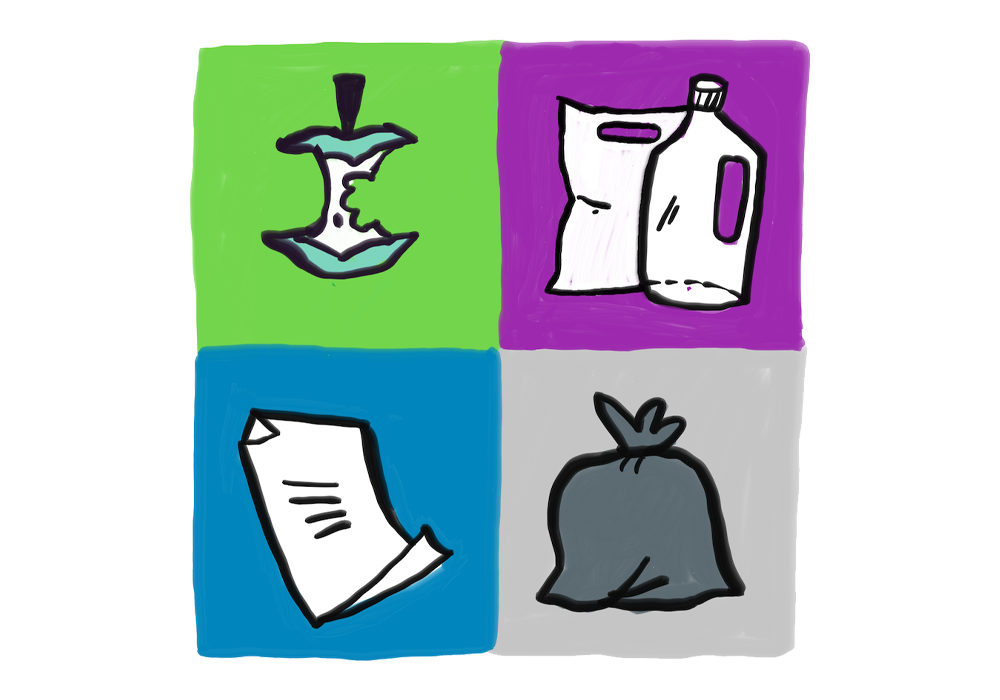
Household waste must be sorted into paper and cardboard, plastic packaging, food waste and mixed household waste.
All homes should have containers for these four categories.
You also need to make sure that glass, metals, batteries, and hazardous waste, textiles, and medications don't end up in mixed household waste. All recycling drop-offs accept metals and glass, and most accept textiles.
Pharmaceuticals and their packaging can be returned to pharmacies. Batteries can be returned to recycling centers and gas stations.
Contact us
Suggestions related to Reykjavík Waste Collection Department services can be submitted through Reykjavík City's Suggestion Portal.
Reykjavík City's service center can be reached at 411-1111.
Email: info@reykjavik.is
