Green Steps development

Illustration of a house shaped like a flowerpot with a woman watering plants on the roof

Green Steps in Reykjavík's operations is action-focused environmental work that includes 15 required measures and 66 additional measures. The measures are organized into three environmental categories: environmental issues, transportation and procurement. These three categories create the biggest environmental impact in the City's operations and give us the best opportunities to make a real difference.

Three environmental categories

Many workplaces have already launched environmental initiatives, and strong environmental practices are in place at numerous locations. Institutions already certified with ISO 14001 environmental management systems or have implemented other types of environmental work like the Green Flag have an easier time adopting the Green Steps.

Here is a list of the actions in each category.

Waste management

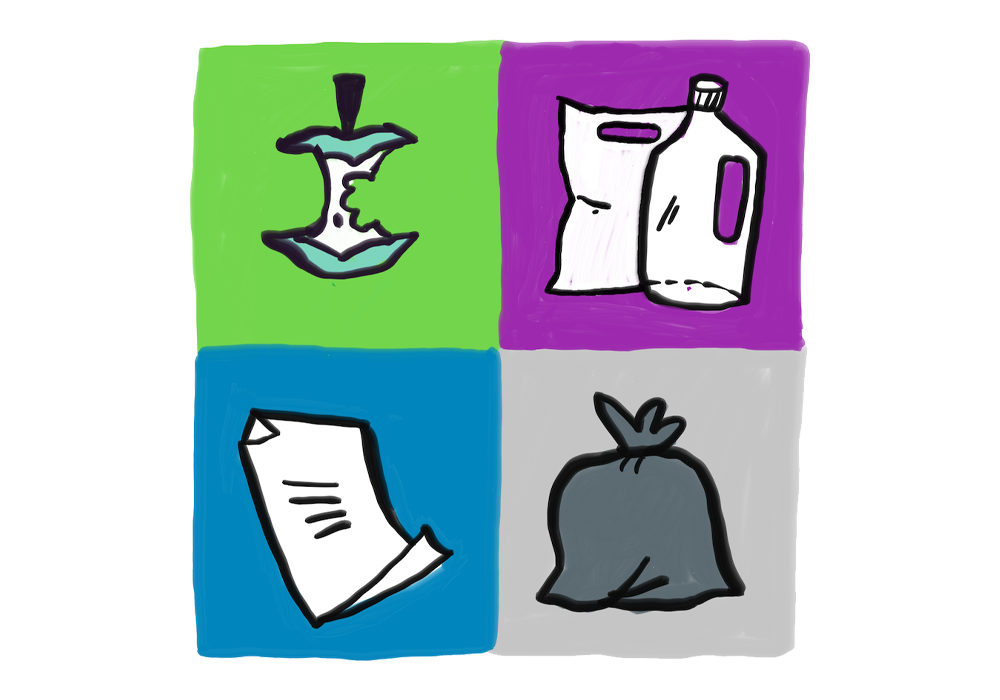
The waste management category emphasizes proper waste sorting, correct labeling of recycling containers, and ensuring the availability of containers for all waste categories. The additional actions also offer ideas for reducing food and other waste and for increasing recycling.

Waste management actions

Required actions

  • Establish goals and an action plan for waste management.
  • The following 6 recycling containers are accessible to staff at the workplace: Mixed waste, organic, paper, plastic, metals, deposit-return beverage containers.
  • All recycling containers are labeled with common Nordic sorting symbols.
  • Glass, hazardous waste, textiles and corrugated cardboard are collected as needed and disposed of properly. All staff know the location of the collection containers.
  • Recycling containers for guests are available in public areas, with at least 3 waste categories.

Additional actions

  • Carefully review food orders to reduce purchasing waste.
  • Carefully review the transportation of food we purchase. Find ways to reduce the carbon footprint of transportation.
  • Provide staff with training on food waste.
  • Weigh food waste and share results with staff.
  • Establish regular cleanups of the refrigerator and other kitchen cabinets, and highlight food that is nearing its expiration date.
  • Post reminders on the refrigerator, such as "wasting food is wasting money" or "don't let good food go to waste."
  • Create a list of ideas for using leftover fruit, vegetables, bread, and other items.
  • Have a specially marked shelf or storage compartment in the refrigerator for food that is purchased jointly or that staff bring and want to share with others.
  • Invite people to take leftovers home, for example after Friday coffee gatherings, parties, lunches, or other events.
  • Donate leftovers to charities or place in community fridges.
  • Change food selection. Remove or buy less of items that are less popular.
  • Encourage people to take smaller portions and return for seconds if needed.
  • Order the correct amount of food for events, meetings, or annual celebrations.
  • Ensure kitchen staff receive training on food waste, food storage, and handling of food scraps.
  • Provide all staff with training on waste sorting.
  • Offer tap water instead of single-use beverage containers at meetings and events.
  • Offer drinks in larger containers rather than smaller ones.
  • Decline small items when ordering food, for example ketchup packets, breadstick sauce, mini soy sauce bottles, and various sauces in small plastic containers.
  • Avoid buying and using single-use cups and tableware.
  • Look for ways to reduce packaging.
  • Require suppliers to deliver goods in reusable boxes and crates.
  • Replace single-use batteries with rechargeable batteries.
  • Reuse paper.
  • Review the amount of printed materials and develop a plan to reduce printing.
  • Reuse packaging.
  • Have sorting instructions near recycling containers and clearly visible to everyone.
  • Make sorting instructions available in English or Polish as needed for foreign staff.
  • Set up recycling containers for guests at all events, both outdoor and indoor. The containers should be clearly labeled plastic, paper, and organic (plus mixed waste if needed).
  • Provide clear sorting information for guests attending events or using the services.
  • Remove trash bins from staff work areas.
  • Assess the environment around the workplace and make improvements if needed.
  • Hold awareness weeks about consumption, sorting, and waste amounts, or plogging outdoors.
  • Skip bags in recycling containers where possible, for example for clean paper or clean plastic.
  • Review the handbook on sustainable events and adapt its checklist to your own operations.


Transportation

In the Transportation category, emphasis is placed on actively commuting to and from work. This involves traveling by foot, bicycle, scooter, or bus. Employers can encourage people to leave their cars at home by improving bike or scooter infrastructure, offering commuting agreements, bus tickets for use during work hours or electric work vehicles for job-related errands. Green steps in transportation can have positive effects on the unit's operations, finances, and employee health, in addition to broader public health benefits.

Required actions

  • Establish goals and an action plan for transportation.
  • Present the goals to staff and encourage them to commute to work using active or green transportation.
  • Ensure all staff receive training on green transportation, commuting agreements, and the workplace's transportation goals.
  • A travel habit survey has been conducted.

Additional actions

  • Provide good facilities for staff and guests to lock bicycles outside the workplace.
  • Examine how we can improve walking and biking access to our workplace.
  • Ensure that staff share trips to meetings and conferences from the workplace, for example, by using green taxis, electric cars, or carpooling.
  • Ensure that green taxis are always ordered.
  • Encourage staff to participate in Bike to Work, Mobility Week, and Motion for Life.
  • Offer bicycles, e-bikes, or electric scooters that all employees have access to and can use for shorter work-related trips.
  • Enable staff to take the city bus during work hours for work-related trips by offering printed bus tickets, Klapp cards, or sending tickets to employees' phones.
  • Develop a policy or guidelines on how often we travel to attend meetings elsewhere, how we travel to meetings, and how often we try to hold meetings using video conferencing equipment.
  • Create facilities for staff who commute using active transportation to hang up wet clothes or change clothes.
  • Have the option to store bikes indoors or in a covered bike shelter outdoors.
  • Encourage all visitors attending events to arrive via environmentally friendly transportation, for example by including a clause about it in the event advertisement.
  • Provide clear information for residents using our services about how they can reach us in an environmentally friendly way. Mention city bus routes that stop in the immediate vicinity, and make maps of bus routes, bike paths, and walking trails available.
  • Convert work vehicles to electric cars and add more charging stations at the workplace.
  • Offer to have the workplace pay for work-related trips on electric scooters.
     

Procurement

Through Green Steps, eco-friendly procurement is implemented at all city institutions by conducting a procurement analysis, recognizing environmental labels and packaging markings, and ensuring that service providers engaged with institutions have an active environmental policy.

Required actions

  • Ensure employees with purchasing authority are familiar with all environmental and warning labels and consider them for all purchases.
  • Complete a first draft of a purchasing analysis. Review and improve the analysis as needed.
  • All hygiene and cleaning products are environmentally certified.

Additional actions

  • Ensure that all items the workplace needs to dispose of are first advertised as free or for sale before deciding to throw them away.
  • Take usable items to thrift stores, free stores, or advertise them in free groups on Facebook.
  • Donate broken electronics to Fjölsmiðjan, which uses them for teaching electronics repair.
  • Check if used furniture is available before buying new (use marketplaces).
  • Use repair services more often before deciding to buy a new item.
  • Share items and create a designated space for items that are purchased collectively.
  • Set up a swap market at the workplace, holding it as often or for as long as there is interest.
  • Choose environmentally certified electronics or electronics with the highest energy efficiency ratings available at the time.
  • Monitor annual use of electricity, heat, and water and track the numbers in climate accounting.
  • Don't buy products that contain palm oil and choose other products instead. Start by replacing at least two products.
  • Choose furniture, paint, and other materials without volatile organic compounds (VOC). Otherwise, ensure good ventilation so that such substances don't accumulate and damage indoor air quality.
  • Don't buy products that contain microplastics, such as glitter glue, glitter decorations, or hygiene and cosmetic products that contain polyethylene or other synthetic fibers.
  • Offer educational materials on the effects of chemicals in our environment.
  • Buy only organically grown coffee and tea.
  • Increase the supply of plant-based food and reduce the supply of meat and dairy products. This applies to both cafeterias and meetings or events.
  • Prioritize responsible purchasing and environmentally friendly thinking when buying Christmas gifts for staff.
  • Buy only Nordic Swan certified napkins and candles for all events, meetings, Christmas parties, and anniversary celebrations.
  • Ensure that new staff always receive the latest information about our processes and goals for green purchasing.